Thursday, May 15, 2008

Tethys: Planetary Oracles

The clerics in service to the planetary essence of Tethys are a varied and passionate lot. Tethys herself is a temperamental world, full of the fervor of life without bounds, seeking to fill every niche with living things intent upon survival. The world itself seems intent upon endless explosions of competing life-forms.

As with all planetary essences, there is much debate as to whether or not this "life force" is independently conscious, or just an impersonal force. Oracles of Tethys almost always insist that there is some sort of intelligence at work, though slow to react and very very fierce.
Those oracles who claim to have had visions of Tethys claim that she is a beautiful and statuesque woman of immense proportions. She is often described as having mixed human, reptilian and piscian characteristics in her form such as a tail, scales and other features mixed with that of a human.
Domains: Animal, Healing, Plant, Water.
Favored Weapon: Dagger.
Portfolio: Sea, Jungles, plants, agriculture, childbirth.

Dogma
The Oracles of Tethys have many regional varieties, but there are certain doctrines that exist amongst all sects. The cycles of birth, marriage and death are of primary concern, and thus mothers, young and old are revered. Cycles of life, and their reverence are strongly promoted. Society is primarily matriarchal, with all women seen as manifestation and representation of Tethys herself.
Fertility rites and medicines are of utmost importance to the Oracles and followers of Tethys, as She herself is known to be very fertile. Herbalism, midwifery and extensive fertility rites (including orgy's) are very common.

Cult of Oceanus
The male aspect of Tethys is known as Oceanus, and is given reverence primarily in the long night, as this is a time of frequent battle as the nights predators emerge. Cultists dedicated to the male aspect are trained in battle and survival, prizing physical power and tests of strength as well as ones ability to sire offspring.

Oracles dedicated to Oceanus claim that he appears as a ferocious man with a wild beard and features of crustacean, reptile and fish, and that he stands well over 60ft in height.

Domains: Animal, Strength, War, Water.
Favored Weapon: Spear.
Portfolio: Sea, Sea Monsters, Shipwrech, Storms.


Monday, May 12, 2008

Tethys: The Helead


Helead

Medium-Size Humanoid
Hit Dice: 3d8+9 (22)
Initiative: +2 (Dex)
Speed: 30 ft., swim 30 ft.
Armor Class: 15 (+2 Dex, +3 natural)
Attacks: Morningstar +5 melee, Crossbow +4 ranged.
Damage: Morningstar 1d8+4, Crossbow 1d8.
Face/Reach: 5 ft. by 5 ft./5 ft.
Saves: Fort +6, Ref +5, Will +2
Abilities: Str 17, Dex 15, Con 17, Int 11, Wis 12, Cha 10
Skills: Climb +2, Handle Animal +6, Hide +8*, Listen +3, Move Silently +6, Spot +2, Wilderness Lore +4.
Climate/Terrain: Fens and waterways.
Organization: Solitary or clan.
Challenge Rating: 2
Treasure: Standard.
Alignment: Always neutral
Advancement: By character class.

The Helead are a race of shy, semi-aquatic reptiles who were elevated to humanoid status by ancient magic. They dwell primarily along the fens and waterways of Tethys where the live on plants and river fish and birds.
As a people, the helead keep to themselves, only rarely interacting with other races. When they do interact with humans, it is as guides or animal trainers, as they keep Anatotitans and other dinosaurs as pets and beasts of burden.
Helead speak their own language as well as the common tongue.

Combat
Helead are not initially violent creatures, but they live in a violent world. In battle, helead are smart combatants, using terrain and their natural abilities.

Illiteracy:
Helead do not automatically know how to read and write. A Helead character may spend 2 skill points to gain the ability to read and write all languages he is able to speak. This is not negated with the taking of literate classes as with the barbarian class.
Skills: Helead receive a +4 racial bonus to Hide and Move Silently checks. *In forested or overgrown areas, the Hide bonus improves to +8.

Helead Society
The helead dwell in hidden villages, located in the middle of swamps on artificial islands, guarded by aquatic monsters. Helead society recognizes no differences between sexes and have no nobles. They are skilled in survival, but produce little art, though they are greedy for shiny jewelry, perticularly gold.
Spellcasting helead are almost always Clerics or Druids, though Sorcerers are held in high regard. Helead clerics typically choose the Animal and Plant domains. The favored class for Helead characters is the Ranger.

Thursday, May 8, 2008

Tethys: Derew Tree Forests

The great Dia Anu forest of central Aphrodite is a living testament to the majesty of nature, as well as a symbol of its ferocity. The mighty Derew tree is related to the Gaian Oak tree, but much taller and of stronger limb, averaging around 500ft in height with many specimens reaching much greater heights.

The great forest of Dia Anu if over 2 1/2 thousand miles across, and sports many trees over a thousand years old. The forest itself is home to an enormously diverse ecosystem of dinosaurs, insects, tree-dwelling mammals, and several human civilizations. Much trade goes up and down the many rivers of this region, though these are monster haunted (see Plesiosaurus).

To survive, human civilization must dwell in treetop villages, in buries towns or in fortified cities, lest they fall prey to the many ground dwelling predators. The dark beneath the boughs are home to a great many light hating predators and spirits, and thus the folk of the treetops are a tough and superstitious lot indeed!

To traverse the treetops, the locals have constructed a vast network of catwalks and hidden ladders, as well as the domestication of a great many arboreal species to act as beasts of burden such as the Derew Cricket below:

Derew Cricket
Large Vermin
Hit Dice: 4d8+8 (26)
Initiative: +1
Speed: 60 ft, Climb 40ft.
Armor Class: 15 (-1 size, +1 Dex, +5 natural)
Attacks: Bite +5 melee,
Damage: Bite 1d6+3,
Face/Reach: 5 ft. by 10 ft./5 ft.
Special Qualities: Darkvision 60ft, Jump
Saves: Fort +6, Ref +2, Will +2
Abilities: Str 17, Dex 13, Con 14, Int -, Wis 12, Cha 4
Skills: Climb +11, Jump +36*, Spot +8
Climate/Terrain: Temperate and warm land
Organization: Solitary or colony (2-5)
Challenge Rating: 2
Treasure: None.
Alignment: Always neutral
Advancement: 5-15 HD (Large)
These creatres are a common sight in the Dia-Anu forests and the Plains of Thunder regions of Tethys. Derew Crickets are horse-sized creatures that resemble grasshoppers, though covered in a green, black and yellow colored fur. They dwell primarily amongst the branches of the Derew tree, where they graze upon leaves and bark.
Though remarkable stupid, these creatures make excellent beasts of burden if trained from birth. They make excellent mounts for use by the tree dweling peoples of the derew forests, though a would-be rider requires a special saddle (masterwork cost) that properly anchors her to the cricket.
Combat
Derew Crickets would rather flee than fight, though if pressed they will bite.
Leap (Ex): A Derew Cricket is a natural jumper. It gains a +30 racial bonus to all Jump checks, and its maximum jumping distance is not limited by its height.
Vermin: Vermin are immune to mind-affecting effects.
Carrying Capacity: A light load for a derew cricket is up to 200 pounds; a medium load, 201-400 pounds; a heavy load, 401-600 pounds. A derew cricket can drag 3,000 pounds.

Wednesday, May 7, 2008

Strange Eons: Poster etc.


To the left is a "movie poster" I produced for a photoshop class. I designed it to resemble those dreadful straight to video sci-fi movies that all within geekdom have watched more than once. I have a great affection for such films.

As can be surmised, this project has gotten me some odd looks from the non-geeks in the class, who have been making sports ads and similar. Ho-hum!

In the project, it all had to come from photos and found objects. Thankfully I just happen to have alot of weird stuff in my home.

Hope you like it!

P.S. The world in the monsters hand is in-fact the world of Tethys, the terraformed Venus.


Thursday, May 1, 2008

Tethys Map 1

Here is the basic map of Tethys. As you can see, there is much detailing to be done (and which I am looking forward to).
As stated earlier, Tethys is a hot, wet world, with temperatures averaging around 80 degrees, with highs of 110 degrees being common towards mid-day. The long day and night cycle of Tethys (each being 243 Gaian/Earth days long) has resulted in a fierce environment.
Thick fog, rain and storms are common and prone to sudden shifts in intensity. Earthquakes are also common, though the great many volcano's of Tethys (roughly 100,000 in count) are almost all considered asleep.
Most of Tethys consists of shallow seas and islands, but there are two prominent continents:
  • Ishtar (at the top of the map, about the size of Australia)
  • Aphrodite (at the right of the map, somewhat smaller than Africa).
  • Phoebe and Labda, though continents in their own right are far swampier. Though they do host abundant life.
Life on Tethys is savage and vibrant. Plant life is extremely plentiful, with many enormous forests, especially on the continent of Aphrodite, where the 500+ foot tall Derew trees grow in vast numbers. The shallow seas and coasts are thick with kelp and other plants, making large sea vessels difficult to use. Fish of wide variety are more than plentiful.
Animal life is no less impressive, as the lower gravity and high oxygen has allowed enormous creatures. Dinosaurs, re-engineered by ancient wizards stalk the land and sea, as do many strange alien creatures and mixed breeds. Anatotitan and Dimetrodon are commonly seen along the rivers and in the marshes of Tethys. Apatasaurus are seen in large numbers as well, though often in the deep forests. Anatotitan are sometimes domesticated as beasts of burden.
The Giant Capybara is a common herd beast found almost anywhere, and is preyed upon by almost everything.
Human civilization is spread out, with only a few large cultures on Ishtar and Aphrodite. Most cultures lead semi-nomadic lives, traveling the seas and swamps during the day and moving into inland to ancestral cities for the long, cold night.

More and more to come dear readers...

Wednesday, April 30, 2008

Random Acts: Technology 1

Common Marvels
Super-advanced gadgets are everyday sights in alot of regions of Strange Eons, albeit often out of the hands of most folks. Some worlds, like Dione, Tethys and Themis (to name a few) require at least some measure of artificial regulation of the environment, though this sort of thing is maintained by ancient robotic constructs.
Most folk who live near or in sight of these ancient devices dont even notice them anymore, and often have elaborate folklore about them when asked.

A Word About Relic Technology
It needs to be stressed that relic technology is potentially very dangerous. The technologies used by the Ancients was so arcane as to render it indistinguishable from magic in many cases. Because of this, and relic device that has been recently discovered has a chance of having some dreadful malfunction. This is handled the same as a Cursed Magic Item, and should be handled in the same way.

Relic Vehicles
Beyond the common animal-drawn vehicles (or just riding animals), there are purely mechanical vehicles to carry a person about. These range from small one-person vehicles to vast starships designed to carry great numbers. This does NOT include things like the many riverboats and sea-going vessels, which are handled differently.
All relic vehicles are of immense complexity, designed to do their job pretty much on their own. As-such all such machines are considered specialized robots, capable of at least a small amount of self-governance, though they are generally subservient to a "pilot" using the Ride skill to control.
I will post information concerning robots and robot vehicles in a future post.

Relic Weapons
Relic technology is quite advanced, with some devices and advancement far beyond human skill and knowledge (so far). Use of Relic Weapons requires the specific Exotic Weapon Proficiency (Antimatter Rifle, Laser Pistol etc); otherwise a –4 penalty is assessed against all attack rolls.

Antimatter Rife: A devastating short-range weapon that can be fired no more than once per round. Those slain by an antimatter rifle are completely destroyed, with no chance at resurrection. The imprisoned energy cell is drained after two shots. Reloading is a standard action. Large Rifle, Damage: 6d10, Crit: x2, Range Increment: 10ft, Type: Special, Market Price: 4,450gp.

Energy Cell: Used to supply charges for relic devices. Cost: 4gp each.

Laser Pistol: Laser pistols can be fired fifty times before the energy cell is drained and have a rate of fire equal to the users number of attacks. Reloading is a standard action. Small Pistol, Damage: 2d10, Crit: x2, Range Increment: 100ft, Type: Special, Market Price: 1,200gp.

Laser Rifle: Laser Riles can be fired fifty times before the encased energy cell is drained and have a rate of fire equal to the users number of attacks. Reloading is a standard action. Large Rifle, Damage: 3d10, Crit: x2, Range Increment: 200ft, Type: Special, Market Price: 2,550gp.

Flamer: The flamer can only be fired once per round and drains the energy cell after ten uses. Reloading is a standard action. The gout of flame deals damage in a 5ft wide stream extending to the maximum range.
Damage: 3d6, Crit: x2, Range Increment: 20ft, Type: Special, Market Price:14,000gp.

Relic Melee Weapons
As with ranged weapons, these require a specific Exotic Weapon Proficiency (Sun Sword, Shiver Knife etc); otherwise a –4 penalty is assessed against all attack rolls.

Sun Sword
(Whoosh-Hummmmm)
When inactive, a sun sword appears as an ornate weapon hilt. When activated, a hissing "blade" of energy issues from the hilt, to the length of a long sword blade. This energy blade is so destructive, that it completely ignored Hardness when used to damage objects also these wepons cannot be parried without another energy blade. These devices require a special self-recharging energy cell that costs 500gp (sold separately) that is completely drained after the sword has been activated ten times.
Medium Melee Weapon,
Damage: 3d8, Crit: 19-20 x2, Type: Special, Market Price: 3,000gp,

The next Technology post will be about ROBOTS!

Below is a brief film of "kinetic sculptor" Theo Jansen. Perhaps some of the more subtle (or not so subtle) robotic beings of Strange Eons will have grown from the eerie designs of this brilliant man.


Friday, April 25, 2008

Tethys: The Inceran

INCERAN
Small Humanoid
Hit Dice: 2d8 (9)
Initiative: +3 (Dex)
Speed: 20 ft., swim 30 ft.
Armor Class: 16 (+1 size, +3 Dex, +2 natural)
Attacks: Mace, light +2 melee, Sling +4 ranged
Damage: Mace, light 1d6+1, Sling 1d4+1
Face/Reach: 5 ft. by 5 ft./5 ft.
Special Qualities: Low-Light Vision, Ink cloud, jet
Saves: Fort +3, Ref +3, Will +1
Abilities: Str 12, Dex 17, Con 11, Int 10, Wis 12, Cha 3
Skills: Hide +6, Listen +3, Spot +3
Feats: Alertness, Simple Weapon Proficiency.
Climate/Terrain: Tethys coasts or floating archipelagos.
Organization: Solitary
Challenge Rating: 1
Treasure: None
Alignment: Always neutral
Advancement: By character class

Level Adjustment: 0

"Go make thyself like a nymph o' the sea: be subject
To no sight but thine and mine, invisible
To every eyeball else. Go take this shape
And hither come in't: go, hence with diligence!"
-Prospero, The Tempest

The Inceran are an aquatic race of creature descended from octopi, elevated to humanoid status through the use of ancient magic. Such "animal men" were created for use as laborers and as test subjects, but now live wild in many places.
Inceran stand roughly 31/2 feet tall, and have rubbery flesh and a distincly octopus-like head. Color ranges considerably and changes with the creatures mood or whims. All inceran have a liking for brightly colored objects and jewelry.
Inceran speak their own tongue and common.

Combat
Inceran are intelligent, though cautious fighters, always having an escape route available.

Amphibious (Ex): Inceran can survive out of the water for 1 hour per 2 points of Constitution.
Ink Cloud (Ex): While in the water, an inceran can emit a cloud of jet-black ink 10 feet high by 10 feet wide by 10 feet long once a minute as a free action. The cloud provides total concealment, which the inceran normally uses to escape a losing fight. Creatures within the cloud suffer the effects of total darkness.
Jet (Ex): An inceran in the water can jet backward once a round as a double move action, at a speed of 200 feet.
Illiterate:
Inceran are illiterate as a Barbarian, though in the incerans case, this cannot be bought off by taking a literate class. Because of this, inceran cannot take levels as a wizard, though other spellcasting classes are possible.
Skills: An inceran can change colors, giving it a +4 racial bonus to Hide checks.

Society
The inceran keep away from humanity for the most part, trading with fishermen or treasure seekers on occasion. Inceran druids or clerics are sometimes sought as healers and wisemen, but more often than not are feared. As inceran holy men, are less inclined to side with a human against the cruel sea than are human clerics.
During the long day, Inceran are solitary and avoid each other except in crisis. During the long night however, inceran gather in large underwater caves heated by geothermal heat to dwell together. While there, they exhage in long debates and musical competitions. It is in this time that mates are chosen.

Inceran Characters
Inceran characters prefer the Cleric or Druid class. Inceran clerics typically choose the Water and Magic domains, and revere the Titan Oceanus, a male aspect of Tethys.


Wednesday, April 23, 2008

Strange Eons: Religion


Religion
Religion (as always) is complex in Strange Eons. For though there is powerful proof of the supernatural, past marvels of mankind have created a cynicism in the common man. Many see religion as an alliance with powerful forces rather than an awe-inspiring experience. Magic, whether arcane or divine is visible, and so requires little or no faith to believe in.
It is because of this that very few people are capable of opening themselves up to the divine enough to become clerics, as a considerable amount of awe is required.
The setting of Strange Eons has many religions, from ancestor worship, reverence of powerful alien intelligences, machines or more abstract concepts. Each has many faces and foci, but only a handful actually produce clerics capable of drawing energy enough to cast spells. They are as follows:

Planetary Oracles (Clerics)
Planetary Oracles are those clerics who revere the power and majesty of their planetary life force, seeking to gain knowledge and power from this massive life-field, and to act as its spokespersons in the world of men. Whether seen as an intelligent being, or an unthinking organism, a planets homeostatic life force is slow to react and communicate, and thus it requires spokesmen and protectors.
Individual planetary cults exist all over the known worlds, communicating the demands of their world to their people, and attempting to guide their people to surviving the fickle and cruel demands of nature. Depending upon the world or region, Planetary Oracles might be found living as a village wise-person, a crazy hermit or adviser to kings.
Cleric Alignment: Any.
Domains: Any two desired, but can only select an alignment domain (such as Good) if the clerics alignment is the same.
Preferred Weapon: Dependant upon region and world. An oracle of Tethys for instance; might choose the net or trident, or perhaps a weapon made from coral or teeth.

Xenogen Cults (Alien Entities)
The alien xenogen sometimes gather cults around themselves, doling out magical energies to their followers for unknown reasons. Such clerics, though powerful, are playing with fire, as these alien beings are impossible to truly understand.
Enormous temples dedicated to one or more Xenogen have been erected, in which dwell at least one major Xenogen being. Within these temples all manner of horror take place, from human sacrifice to vast cross-species orgies of sex and mutilation. Xenogens do not often lay down rules, but rather the clerics must take careful notes to ensure how best to interpret the needs of these alien monsters.
Cleric Alignments: Any Non-Good.
Domains: Chaos, Evil, Magic.
Preferred Weapon: Tentacle (Unarmed Strike).

Machine Cults (Robot Cults)
The machines of the ancients are many, some of whom continue to maintain the artificially maintained conditions of terraformed worlds. As many such robots are busy with maintaining and protecting planetary life forces, Planetary Oracles are often drawn to work with them, becoming half-mechanics in their own right. Such specialized clerics are created as standard Clerics (or other primary divine spellcaster), but are always Lawful and called to gain proficiency in Craft (Mechanism) and Knowledge (Technology) or Knowledge (Architecture/Engineering). Some become so proficient, that they gain skill with the building and attaching or Robotic Construct Limbs (see below).

Construct limbs: One or more of the subject's limbs are replaced with artificial limbs. There are two types of construct limbs: robotic construct limb. Each type is described below.Robotic construct limb: These are wonders of magical engineering that approximate the form of the lost limb and grant the subject increased strength and/or speed. They are more often used to replace lost or irreparably damaged limbs than living ones. These limbs grant a +2 enhancement bonus to Strength (for arms) or +10 feet to base speed (for legs). If both arms or legs are replaced, the bonus is doubled. The limb is constructed of magically enhanced steel, mithral, or some combination thereof, but is rendered impervious to rust as a byproduct of its manufacture. It has hardness 15 and can withstand up to 50 hit points before being destroyed; these hit points are exclusive of the subject's normal total.Gaining mechanical limbs has a learning curve – it takes time to adjust to the new prosthetic limbs and exactly how far they can go. If the character has a new arm, he suffers a -4 penalty to all skills that require fine manipulation (Open Locks, Sleight of Hand, etc.) for a number of weeks equal to 15 minus his Int score (minimum 1 week). If the new limb is a leg, he suffers a -2 penalty to Dex-related checks and Reflex saves. A second limb of the same type also requires a time of adjustment, but it is halved (minimum 1 week).
Creation: Crafting mechanical limbs requires a DC 20 Craft (Mechanism) check and a DC 15 Knowledge (Technology) check. An arm or leg for a Medium creature costs 10,000 gp; decrease the cost by 1,000 per size below Medium, or increase it by 2,500 per size above Medium.

Friday, April 18, 2008

STRANGE EONS: Society

The thing to remember about Strange Eons, is that its a world at the end of a truly enormous history. Reminders of mans space-faring accomplishments and technological achievements are everywhere. Ruins of ancient cities and grounded starships litter the landscape in many regions, and in some cases comprise all available living space.
Mankind lives beneath the shadow of so much history that he feels overwhelmed at times. There is so much history to slog through, that most people don't care to bother, leaving the cataloging of history to archivist robots.

Population
Long past are the days of enormous cities filled to bursting with human life. Now mankind lives in far flung city states and remote villages and tribes. As the years pass, there are less and less true humans being born, as this once mighty race comes to a slow end.
Some planetary Oracles (clerics) claim that mankind's vitality is linked with the life-force of her mother world Gaia, and as she drifts into a final sleep so shall mankind dwindle. It is postulated that mankind must either seek to revitalize her (a daunting task), or bind themselves more fully with another world spirit. Most prefer to do nothing, and so mankind dwindles.
Certain "breeds" of human are more populous than others, as their livelihoods and numbers are a subject of resources and are force-bred. Other breeds, living wild and untamed lives have recaptured some of mans ancient zest for life, but are brutal versions of mankind, more animal than anything else.

Morality
The "civilized" people of Strange Eons have given in to a sort of decadent apathy, lacking strong enough feelings about grisly acts of depravity. Dreadful acts such as slavery, torture, public bloodsport and even occasional cannibalism (of "lesser" breeds of humanoid of course), are not readily rejected.
Amongst wizards and sorcerers, this apathy often takes the form of a "scientific" detachment. This allows them to take part in the most obscene despoiling of a person or creature out of mere curiosity.
Strangely enough, it is the barbarian who most often rejects such acts as evil, going out of his way to destroy would-be practitioners of such acts. Many barbarian tribes see this apathy as a sure sign of the evils of civilization.
Strong alignment is rare in regards to Good or Evil, though the more seriously apathetic could be considered Evil. Rather most "civilized" folk tend towards Lawful Neutrality, or even true Neutrality.

Government
Large empires are a thing of the past for most folks, with city-states the most often seen governmental system, though some will be quite large. All such city-states will be ruled by one or more predominant families, who themselves are beholding to powerful wizards in some way.
Conflict and rivalry between city-states is common, with raids, sabotage and outright war fairly common. The reasons for this can be virtually anything, from bloodlust and vengeance to a real or imagined insult. Life is cheap in this era.
Some traveling cultures exist, living their entire lives in motion up and down the rivers or coastline, or between worlds in spacecraft. These will be handled in later postings.

Nobles
Quite different from the petty kings of savage regions (who are little more than peasants), the "true" nobles of Strange Eons are the result of many generations of careful breeding and culture. These rulers of men, are the aristocratic elite, who exist in splendor and decadence amidst the fruits of their ancestors labors, while the common man drudges on.
Nobles rule through force of might, often coupled with technological and/or magical support. The greatest of rulers are those with magical abilities, either Wizards or Sorcerers or perhaps Clerics (though the last is rare). Access to some ancient tech is also a plus, though having such a device will likely result in a powerful spellcaster coming to take it for himself.


The Common Man
The common man of Strange Eons is surprisingly skeptical, despite being quasi-medieval in culture. Even magic is often assumed to be some marvel of forgotten technology than a supernatural force. Despite this skepticism, commoners rarely know more than the simplest versions about the past,
This doesn't mean that the common folk lack a sense of wonder, its just that they posses a sort of stiff-necked practicality that makes them haughty in the face of "superstition".
The common folk of different regions and worlds are very different in many ways, but all live simple, short, hard lives of toil. Dangerous creatures both wild and domestic haunt their world, but they trudge on regardless. Technology is between that of 14th-16th century Europe, but can be considerably more primitive.

Guilds
Powerful organizations of common craftsmen, the guilds hold tremendous power. Within city-states, the guilds control all craftsmen, meting out harsh justice on "freelance" craftsmen. Individual guilds all control their own specialized lore and maintain histories of their craft. Often, it is guildsmen who are the best equipped to maintain ancient technology, and in some cases beild new versions of old designs.
Some guilds are: Alchemists, Apothecaries, Beast Handlers, Blacksmith and Metal-workers, Brewers, Coachmen, Cobblers, Furriers, Guardsmen, Leather Workers, Librarians, Machinists, Navigators, Shipwrights, Slavers and many others.
Obviously, hunter-gathering cultures have no need for guilds, and thus Barbarian types don't know what to make of the guilds.

Barbarians
Far from the cultural centers and city states, savage tribes of humans and other beings hold to different lays and customs. Few barbarian peoples know anything about mans past achievements, living for the now in violent splendour. It should come as no surprise that barbarians are far more vital and prone to strong populations than "civilized" peoples, though their exuberant lives are far shorter.
Barbarians are particularly prevelent upon Dione (Mars) and Tethys (Venus) though they differ greatly in physical makeup. Barbarian religion often denounces all arcane magic as evil, and a few advocate orders of wizard slayers.

Tuesday, April 15, 2008

Strange Eons: Classes and Skills

Many of the classes originally presented in the Players Handbook are perfectly appropriate, though there will be some changes. I personally like the Generic Classes approach to D20 games, as it allows personal versatility, and for a more individualistic character selection.
In the shattered remnants of a once mighty people, mankind has been brought back to the basics of survival, though with constant reminders of what has been lost all around him.
STRANGE EONS CLASSES


Below are the PHB player character classes of the Strange Eons setting:

Barbarian:
No changes necessary in a Strange Eons campaign. As the worlds have plunged into untamed and often alien savagery, man has needed to learn to fight hard to survive. In such a world, the barbarian often reigns supreme.
Bard: No changes necessary in a Strange Eons campaign. Aristocratic magicians of no small reputation, bards are considered to be the only "good" spellcasters by the common folk of Strange Eons. Many bards can be found operating as cult leaders and advisors as well as adventurers.
Cleric: No changes necessary in a Strange Eons campaign. Though all Clerics will either follow Planetary Cults, Machine Cults, or Xenogen (alien) demon cults. See Strange Eons Religion for more details.
Druid: No changes necessary in a Strange Eons campaign. Same as Clerics, though without large religious structures. These spellcasters tend to only be found in the most remote of locales.
Fighter: No changes necessary in a Strange Eons campaign. This is the most common PC class for a Strange Eons campaign.
Monk: No changes necessary in a Strange Eons campaign. Monks are often religious leaders of various cults and philosophies. Cults dedicated to powerful wizards often sport many monk orders, acting as "witch hunters" sent out to cut down on the number of up-and-coming wizards.
Paladin: Inappropriate to a Strange Eons campaign. The gods of the Strange Eons setting are either more force than person, amoral or terribly evil, this class doent fit well.
Ranger: No changes necessary in a Strange Eons campaign. Rangers exist along all of the fringes. Undead hunting rangers are common in the many half-ruined cities.

Rogue: No changes necessary in a Strange Eons campaign. This would also be a common PC class in Strange Eons.
Sorcerer: No changes necessary in a Strange Eons campaign. These peasant sorcerers are the most commonly encountered practitioners of the higher magics, though often ignorant of its deeper principles. Many sorcerers were granted their powers from the bizarre processes of the Xenogen aliens.
Wizard: No changes necessary in a Strange Eons campaign. The top magical power in the setting and thus the most feared of creatures. The most powerful wizards are ancient beings some of whom remember earlier ages of mans might.
Prestige Classes

Forester: Wilderness warriors that seek to maintain the natural order, and eliminate unnatural creatures. Replace the Requirements as follows:
Base Attack Bonus: +4.
Skills: Wilderness Lore 9 ranks, Knowledge (nature) 5 ranks.
Feats: Ambidexterity, Track.
Special: Must have been accepted and trained by Gardener Robotic Constructs or another Forester.

Gypsy: Traveling mystics and diviners, gypsy's can be found on any world.

Serpent Archer: Worshipers of serpents and serpent monsters, these mystics are greatly feared. Most often found on the world Tethys, where they are known as Ufions Children.
Scorpion Scion: Worshipers of poisonous vermin, these mystics are greatly feared. Most often found on the world Tethys and are most active at night.

Knowledge (Technology) (Int)
You can make a Knowledge (technology) check to correctly identify airships as well as identify unfamiliar technological devices.
Check: The DCs for identifying technological items vary depending on the type of information required:
  • Identifying an airship by its type: DC 10.
  • Determining the function or purpose of a particular mechanical system: DC 15.
  • Determining the function or purpose of a particular mechanical or electrical system: DC 15.
  • Recalling the standard, factory-model design specs of a particular type or class of airship: DC 20.
When confronted with an unfamiliar piece of technology or artifact, you can make a Knowledge (technology) check to correctly surmise the primary (if not singular) purpose of the device. A successful check result does not enable you to activate the item, nor does it make you proficient with the item. The DC of the Knowledge (technology) check depends on the item being identified:
Unfamiliar Item
DC
Basic tool or instrument
10
Vehicular component
15
Airship component
20
Ancient weapon or biotechnology
25
Pilot (Dex)
You can use the Pilot skill to fly any kind of airship.

Check: Unless you have the appropriate Airship Operation feat, you take a −4 penalty on Pilot checks made to pilot an airship.
Repair (Int)
You can use this skill to repair machines.

Check: Repairing damage to a device or construct takes 1 hour of work, a mechanical tool kit and a proper facility such as a workshop or hangar bay. (Without a tool kit, you take a −4 penalty on your Repair check.) At the end of the hour, make a Repair check (DC 20). Success repairs 2d6 points of damage. If damage remains, you may continue to make repairs for as many hours as it takes to restore the vehicle to full hit points.
Special: A construct, device or vehicle that is reduced to 0 hp cannot be repaired. It can be salvaged for parts, however.


Friday, April 11, 2008

STRANGE EONS: Tethys Tidbits

"Thee gliding through the sea of form,
Like the lightning through the storm,
Somewhat not to be possessed,
Somewhat not to be caressed,
No feet so fleet could ever find,
No perfect form could ever bind.
-Ode To Beauty, R.W. Emerson


I will be posting additional information of the Strange Eons campaign setting soon. Focusing upon the world of Tethys (our Venus), its people, faiths, creatures and oddities. Discussing this one world of the far future is a big task, so I will be giving it in parts. Below are some tidbits about Tethys and a human racial variant that is fairly numerous in the forested interior of many of Tethys islands.

Conditions
Tethys is a hot world, averaging 90 degrees in the daytime, with 80-100% humidity with nights dropping to an average of 40 degrees. A day (and night) on Tethys is 243 Gaian (Earth) days in length. Fog and storms are frequent in the long evening hours as temperature and pressure drops quickly, creating severe to hurricane level winds, and thunderstorms (see Environmental dangers in the DMG or here).A large civilization of nomads exist on Tethys, following seagoing animals and harvesting edible plants during the long day and moving to island settlements during the night. Few of these travelling folk dwell permanently in the nightime communities though those who do must maintains these seasonal cities for the tribes return. All of these communities must be defensible, as many dread predators stalk the nightime forests and shorelines of Tethys.There are two jungle-covered continents on Tethys, both of whom sport civilizations to be detailed soon. Life in these lands is harsh, as there are many warring cultures and dangerous beasts.
Singers of Barnumbirr (Spellcaster Tradition)
Ancestor worshippers, who hold a (Gaian) week long festival in the long hours before the Tethys dawn, with the aid of a richly decorated "Morning Star Pole", the singers claim to be able to communicate with their dead loved ones, showing that they still love and remember them.
Cities of Glass and Air (Aerostat Habitats)
Orbiting Tethys every four Gaian days, these massive floating fortresses are now all but abandoned by human life. It is said that these flying cities were originally made to act as heat shields and atmospheric processors for the planet. They appear as though made of glass, and operated by ancient robots.
Sometimes a caretaker robot from one of the cities will come down to the surface for unknown reasons. Mostly these robotic beings avoid human contact, but sometimes they seek out humans to batter with strange questions or even to take away to their sky homes.
Greenfolk (Template)
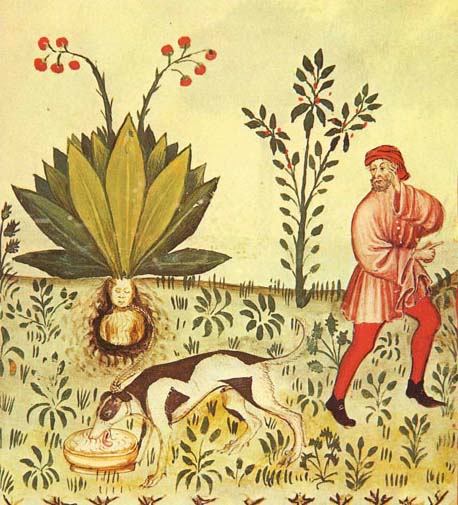
These plant people were originally bred for labor and pleasure slaves, but now can be found living wild in many forested regions. Greenfolk appear as standard humans, though quite beautiful, with green skin, and white, green, yellow, or blue hair. Though possessing decidedly male and female forms, all greenfolk are Hermaphrodites, possessing both male and female reproductive organs. Green folk young spend their infant years as immobile plants called a homuncili root, arising as young adults after only four Gaian years.
The greenfolk of Tethys are called Oceanids, or Dryads, while on Gaia they are known as Nymphs or Nereids. Greenfolk are virtually unknown on other worlds.
Greenfolk are a friendly people, though given to strange flights of fancy. Though appearing to have the same emotional extremes as humans, greenfolk view sex and relationships in terms of “play” rather than long-standing bonds. This has fueled the prose of many tragic romances amongst love-besotted humans. Game-wise, greenfolk are the same as humans in every way save as follows:
  • Attributes: +2 Constitution, -2 Intelligence.
  • Plant Type: Plants are immune to poison, sleep, paralysis, stunning, and polymorphing. They are not subject to critical hits or mind-influencing effects.
  • Low-light Vision: Greenfolk can see twice as far as a human in starlight, moonlight, torchlight, and similar conditions of poor illumination. They retain the ability to distinguish color and detail under these conditions.
  • Photosynthesis: Greenfolk require 1/2 the daily requirement of food as determined by their size if the character spends at least one hour in sunlight.
  • Skills: Greenfolk receive a +2 racial bonus to Hide, Listen, Move Silently, and Spot checks.
  • Level Adjustment: +2.
Creatures of Tethys
The following creatures from the Monstrous Manual are fairly common on Tethys:Ankheg, Animal (aquatic and jungle types), Assasin Vine, Athach, Dinosaur (Any), Dire Animal (Any), Fungus, and all forms of Monstrous Vermin (including the Giant Dragonfly and Firefriend). Many other monsters do exist, particularly Elementals and the more nature or elementally-oriented Outsiders such as the Arrowhawk, Couatl, Leomarh, Lillend and Mudmen.In addition to the varieties mentioned in the Monstrous Manual, many other species of Dinosaurs and Dire Animals are common, and even domesticated on occasion.

DISNEY & DRAGONS: D&D in Fantasyland

Many times, in recent years I have encountered would-be players of Dungeons and Dragons whose sole experience with the fantasy genre h...