Showing posts with label House Rules. Show all posts

Thursday, January 23, 2014

Dagger: Races of Yore

The Land of Yore is a big place, and a number of races can be found within its borders. Greek myth is a favorite of mine and my players, and so I am including a few races that will fit nicely. Elves are unknown in the setting, being replaced by Centaurs and Satyrs as the woodland types. Dwarf-like beings are not unknown in Greek myth in the form of the Dactyls, and so will be fine in Yore.
These rules are all for use with the Dagger RPG by Brave Halfling Publishing. Dagger is a ruleset designed for young (7+) players and older players who don't like a great deal of rules. These rules allow new players to play in classic D&D modules with a minimum of fuss.


CENTAUR
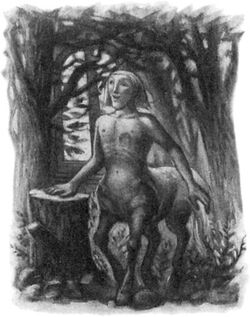
"That is human nonsense. Trivial hurts, tiny human accidents, these are of no more significance than the scurryings of ants to the wide universe, and are unaffected by planetary movements." -Firenze
Centaurs are woodland beings who usually shun the company of men. They dwell in remote, secluded glades and pastures. The appearance of a centaur is unmistakable: they have the upper torso, arms, and head of a human being and the lower body of a large, powerful horse.
The centaurs of Yore live primarily in the wild Cacus Hills (see Map) where they keep mostly to themselves. Occasionally, centaur families or individuals will seek their fortune among men. Such centaurs usually work as herbalists and apothecaries, using their knowledge of plants and the seasons to good advantage. The less intelligent centaurs work as laborers and mercenaries.
Special Ability: Centaurs can kick twice per round with their hooves dealing 1d6 damage each and have a movement rate of 18. Centaurs can carry as much as a medium warhorse. Centaus cannot climb sheer surfaces or traverse underground tunnels.
Starting Equipment: Oaken club (morningstar), bow, 3d10 arrows.
Armor Class: 5 (14)
Centaurs advance and attack as Fighters.


CYCLOPS-KIN
"You are not dead! I like it when you are not dead!" –Tyson
Cyclops-kin are single-eyed giants that live alone or in small bands. The typical cyclops-kin weighs around 350 pounds, and stands 7½ feet tall. A single large, red eye dominates the center of its forehead. Cyclops-kin commonly dress in ragged animal hides and sandals. Cyclops-kin are not very intelligent creatures, with the nicer cyclops-kin acting like big goofy (but very strong) children. The smarter cyclops-kin are usually quite, contemplative creatures.
Wild tribes of cyclops-kin wander the mountains of Yore living in caves or in rough huts. Cyclops-kin are usually goat-herders (making surprisingly goo cheese) but will occasionally raid civilized lands, and are seen as monsters. Some tribes of cyclops-kin have learned a bit of civilization and live in or near human cities. Such "civilized" cyclops-kin work of brute laborers, herdsmen, thugs and soldiers.
Special Ability: Cyclops-kin can see in the dark up to 60’, but suffer a -2 penalty to all missile attack rolls. The great strength of Cyclops-kin grants them a +4 damage. Cyclopskin are too big for most armor.
Starting Equipment: Club, spear, loincloth.
Armor Class: 3 (16)
Cyclops-kin advance and attack as Elves and Dwarves.


SATYR
"I can no longer consider you as a friend," said the Satyr, "a fellow who with the same breath blows hot and cold." -Aesop, The Satyr and the Traveller
Also called fauns, satyrs are a pleasure loving race of half-human, half-goat creatures. They symbolize nature's carefree ways. Satyrs have the torso, head, and arms of a man, and the hind legs of a goat. All satyrs eat and drink too much, and are notoriously bad with money. Because of this they are often favorites wherever there is a party, but very unwelcome when there is not.
Most satyrs of Yore live in wandering bands who keep mostly to the forests and to the Cacus Hills (see Map), where they have close alliances with the Centaurs. When Satyrs live near or with humankind they generally make their living as actors, playwrights and musicians. Though they can make a good living this way, satyrs are terrible with money and are notorious carousers.
Special Ability: Satyrs can gore opponents with their horns, dealing 2d4 damage, and have a movement rate of 18. Each day, a satyr can use his musical instrument to cast one spell per level of experience. At 1st level a satyr gets one 1st level spell, at 2nd level he gets one 2nd level spell, and so on. Satyrs are all highly skilled musicians.
Starting Equipment: Musical instrument (pipes or fiddle), backpack, torch.
Armor Class: 5 (14)
Satyrs advance and attack as Wizards.

These races are for use with the Dagger RPG by Brave Halfling Publishing. Dagger is a fun, simplified version of the basic D&D rules that allows kids (and adults who want a simpler game) to play the game. These rules are perfectly compatible for classic role-playing modules. 

Friday, September 13, 2013

Arae: Trolls of Trollbottom Swamp

Trolls (Player Characters)
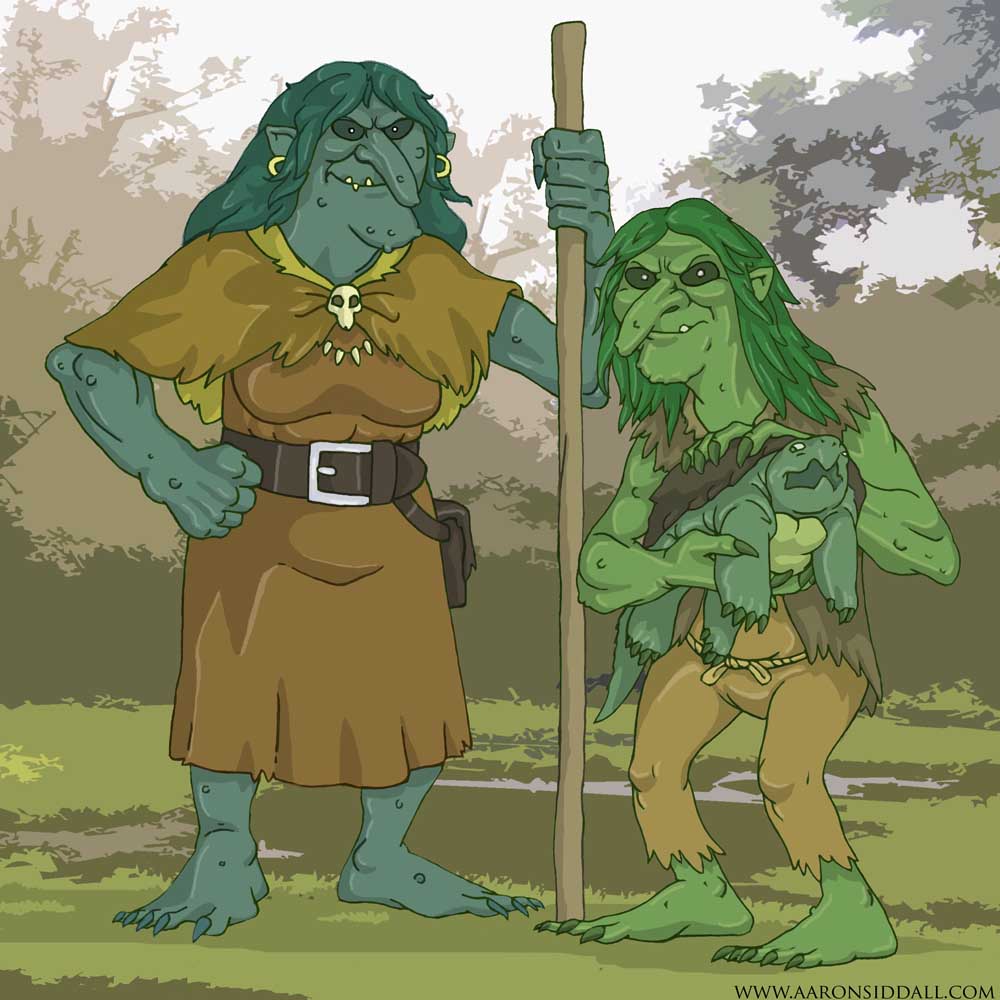
Trolls are a ferocious race of giant-kin with warty green, grey or brown skin, long noses and thick ropy hair. Though giants, trolls also share a kinship with the fae, and can often be found in places where the darker sorts of faerie creatures congregate. Few races like trolls, as their wilder brethren do eat intelligent beings, but those trolls who have come to terms with civilization are valued as warriors, laborers and leg-breakers. Most trolls are aligned with Chaos, but the more civilized are aligned with Neutrality.
The average troll stands nine feet tall and weighs roughly 500 pounds, though females tend to be a bit larger than males. The hide of trolls is rubbery, and grants them a +2 bonus to Armor Class. They are large creatures, so their armor costs double the normal price. They can see in the dark up to 60 feet. This “darkvision” is in black and white only, but it is otherwise like normal sight.
Trolls modify their starting ability scores as follows: Str +6 (max. 20), Dex +2, Con +6 (max. 20), Int -2, Wis -1, Cha -2. Trolls are immensely strong, wiry and possess superhuman endurance. However they are not very intelligent, are reckless and hideous by human standards.
Trolls  regenerate 1d4 points of damage automatically each round on their turn. In addition, it can replace body parts that have been severed by holding them up to its stump for 1 round. Body parts can also be re-grown over the course of 24 hours. Wounds dealt by acid or fire cannot be regenerated in this way.
Trolls speak Common and Troll. They might also speak Dwarf, Goblin, Kobold, Orc, Ogre, Hill Giant and Infernal.
Trolls can only be Beastmasters* (Druid variant), Curmudgeons, Defenders (fighter variant), Druids*, Fighters, Scouts (thief variant), She-Devils (female trolls), or Thieves and can only advance to 5th level.
*Spellcasting trolls are widespread in folklore, but it is the magic of the elements, shapeshifting and the deep wilderness. All powers handled well by the Beastmaster and Druid class.


Trollbottom Swamp 
Trollbottom Swamp is a huge blackwater swamp to be found south of the Yandor River. It is a stinking fen choked with muddy water, bald cypress, and tulepo swamp forests. The swamp has a large number of carnivorous plants, insects and reptiles. It also has trolls.
The trolls of Trollbottom Swamp originally fled here over two centuries ago to escape slavery at the hands of the Fire Giants of the Western Mountains. Since that day, these trolls have adapted well to life in the swamp. The swamp has many dangers that can make quick work of an unwary troll, and so the trolls have learned the use of teamwork, fire and trade.
Though they still do occasionally eat people, the Trolls of Trollbottom are far more willing to trade and bargain than their mountain kinfolk. A taste for strong drink, especially whiskey made by the Orc brewers of Sprogton (see regional details) has gone a long way towards "civilizing" these trolls.


These rules are made for use with the Blood and Treasure RPG. This game mirrors classic versions of Dungeons and Dragons. 

Friday, March 22, 2013

Pangea: Stone Age Armor and Weapons

In the world of Pangea, the majority of mankind is still well into a Stone Age level of development. This means that most communities, tribes and races use the readily available materials of Stone, Wood, Bone and Animal Hide for everyday use and in the making or armor and weapons. Though the city-states are at a Bronze Age level of development (see Bronze Age Weapons Arms and Equipment), the average person of Pangea does not yet have access to a steady supply of bronze-age goods and skills. And so a mixing of the two is common.
System: Stone Age level items can be made and possibly repaired by any character with the Survival skill. When the necessary components are available (GMs are advised to reward creativity on the players part), a skill check produces one such item.


MELEE WEAPONS
Chopper: These items were designed to be tools to dig through rough ground to find food (tubers and grubs) as well as in chopping or shaping soft woods and skinning animals. They could be pressed into service as a weapon and would eventually become much more effective when combined with a haft in the form of a handaxe.

Club: Most Stone Age examples of this oldest weapon are improvised, simply a large sturdy branch found after a storm or broken off a tree. The bone club is found among the remains of animal kills. The hardwood club is the one exception, and is an extremely rare and potent weapon due to the difficulty of shaping hardwoods with stone cutting implements. The hardwood club is the one Stone Age example of this weapon that is not a weapon of convenience and will often feature such minor improvements as leather wrapping around the handle of the weapon, making it easier to grip in combat.

Hammer: These weapons are a variation on the Handaxe, though employing a blunt stone. These weapons are used to bludgeon prey and foes and are also used in construction.

Handaxe: One of the major technological advancements of the Stone Age, these items were valuable as both tools and weapons (some argue more the former than the latter) and developed from the “choppers”, axe heads held in the hand to skin animals and chop wood. With these items came the ability to shape wood for specific purposes, including more sophisticated clubs, but also hafting. With hafting both the axe and spear were born and humans went from prey animals to hunters in their own right.

Knife: Like the chopper, the knife was more of a tool than a true weapon although sharpened bone stakes were probably intended to be stabbing devices. Like the chopper, these items benefited from hafting, when they were transformed into spears.

Maul: Effectively a really big Hammer, and usable only by the very strong. Kabiri, giants and the very strong enjoy the power of this weapon. Only those with a Strength of at least 16 can wield a Stone Maul, all others suffer a -2 penalty.

Spear: As mentioned above the spear was developed by the addition of a haft to a knife, allowing the attacker to increase his reach and keep his enemy at bay while increasing the force of his thrusts. These weapons could also be thrown, allowing the attacker to extend the range of his attacks even further.


RANGED WEAPONS
Atlatl: The atlatl is a “spear thrower” designed to increase the velocity (and thus the range and damage) of the javelin and the dart. These items are modified as listed in the equipment table above, gaining an improved Range Increment and (in the case of the weighted atlatl) a damage bonus.

Dart: The dart is a tiny javelin used as a weapon by primitive cultures, often in conjunction with either poison or the atlatl.

Javelin: The javelin is one of the most effective ranged weapons of the Stone Age, especially when combined with the atlatl. Because of its superior range, many armies use these weapons for ranged attacks with soldiers carrying only a single true spear for melee combat.

Shortbow: The shortbow is one of the most important weapons ever invented and has a great deal of impact on hunting and warfare. The ability to hurl missiles accurately and with great force across great distances allows the attacker to keep his enemy at bay, hopefully killing an attacker or animal before they can close to injure him. Shortbows do not allow the wielder to add his Strength modifier to bow damage.

Stone, thrown: One of the simplest weapons imaginable, this is nothing more than a rock that has been chosen (or shaped) to extend its throwing range. This is also the ammunition for the sling.


ARMOR

Cured Hide: Animal hide needs proper treatment or it will rot. Use of hide is common in making clothing, particularly trousers, shirts, gloves and shoes. Cured hide armor uses thick layers of hide stitched together , making an effective armor and are fairly warm (though a bit stuffy in warm weather).

Furs: Animal furs are widely used to make clothing. Such clothing are usually kilts or skirts, shirts, cloaks, gloves, leg warmers and hats. As armor they are somewhat useful, and are favored by hunters and those wishing to move freely and stay warm.

Bone: Bone is used in the making of tools, buttons, needles, jewelry and more, but it is sometimes employed in the making or armor. Bone armor uses the bones of hearty animals (such as dinosaurs) into armor plates stitched over leather. Such armor can be impressive, but can rattle a bit.


STONE AGE MATERIALS
Bone: Bone weapons offer some advantages over stone, but also some significant drawbacks. Bone weapons can be brought to a much finer point than stone or wood, making these weapons some of the most dangerous encountered in a Stone Age society. Where bone weapons suffer in comparison to stone is in their durability.
A bone weapon breaks on a natural attack roll of 1. If a weapon breaks during a successful attack normal damage is still inflicted on the target.

Wood: The advantages of wooden weapons are that they can always be fashioned with ease and materials are in ready supply. Still, these weapons are primitive even by Stone Age standards.
A wooden weapon breaks on a natural attack roll of 1. If a weapon breaks during a successful attack normal damage is still inflicted on the target.
Wooden piercing and slashing weapons suffer a -2 circumstance penalty to attack rolls against armored targets, including creatures with a natural armor bonus of +2 or higher.

Stone: A step up from wood, weapons made of stone can be honed to a sharp point by a well-equipped craftsman, increasing the damage potential of the weapon being made. While still prone to flaking and shattering these weapons are also more durable than those made of wood alone.
A stone weapon breaks on a natural attack roll of 1. If a weapon breaks during a successful attack normal damage is still inflicted on the target.


EVERYDAY ITEMS
Some of the items listed on page 38 and 39 in the Blood and Treasure PHB can be produced with Stone Age level skills, but will be made with Stone, Wood, Bone, Hide or similarly "primitive" materials. The following items may be produced with Stone Age materials.

Clothing: Artisans Outfit, Cloak, Cold Weather Outfit (see below), Explorers Outfit, Peasants Outfit, Travelers Outfit.

Miscellaneous Items: Backpack, Basket, Blanket, Block and Tackle, Firewood, Fishhook, Fishing Net, Grappling Hook, Hammer (see Melee Weapons), Pole (10'), Pouch, Rope (Hempen), Sack, Sledge, Torch, Waterskin.


Thursday, January 31, 2013

Pangea: A Blood & Treasure Campaign Setting


Pangea
Pangea is a world that I will be detailing for use with the Blood and Treasure Fantasy RPG. This is to be a Sword and Sorcery setting that will borrow liberally from my favorite books, comics and movies that can be shoe-horned into the setting. It will be a primordial world, filled with ancient beasts, decadent cities and wandering barbarians. I make no attempt at historic accuracy, relying instead upon the Rule of Cool.
The map above is merely the black-and-white beginning. Color, details and lots of regional info is to come.

The World
The world of Pangea is largely unexplored (by humans). Soaring mountains, teeming jungles, and wide plains cover the land and the seas are vast and deep. The warmer climes host dinosaurs, huge insects and wild tribes. The colder lands are home to a wide range of mega-fauna mammals
Smaller and more modern animals do exist, and are found in many of the climes they are today. Such animals are usually a more feral variety (wolfish dogs, and smallish shaggy horses for instance), but are recognizable.

Society
Most of the peoples of Pangea live in wandering tribes, small kingdoms or city-states. Technology varies from stone age to iron age in development, with some noticeable jumps due to the use of magic. People will be as varied as they are today, though with a larger number of adventurers.

Races
The Blood & Treasure RPG suggests a number of humanoid races for play. Most of the people of Pangea would react to seeing an Elf or Dwarf much like they would to seeing a ghost, as magic and clearly non-human races are widely feared (and for good reason). So none of the standard fantasy races will be available for play. Rather than using differing races, Pangea will have a number of Human-kin races, with only a small number of non-humans (NPC's). I will post an article on these races next week.

So stay tuned! MUCH more to come!

Thursday, January 10, 2013

Atomic Dawn: GMK Series Mecha

The GMK series Mecha is a type of general-purpose engineering vehicle left over from the Transgenic Wars. The GMK series were used to construct and maintain everything from remote outposts to space platforms as well as harvest resources. These vehicles are still used by Utopian Domes, CostMart and Copernicus City on the Moon. The Alamo Empire has purchased a number of these units from CostMart, which are used to maintain levies, dams and other major works of engineering, and (occasionally) combat. The Guild of Engineers makes great use of these devices.
As a robot, GMK units are simple laborers capable of doing only what they are explicitly instructed to do. However, these devices are equipped with a cockpit large enough to accommodate a human sized pilot. Once inside the GMK is capable of doing whatever the pilot is capable of, and attack based on the pilot's ability. 

Hit Dice: 10
Frame: Biomorph
Locomotion: Legs (2)
Manipulators: x2 Claws
Armor: Duralloy (AC 3)
Sensors: Class III
Mental Programming: Programming
Controls: Basic Controls (joystick and foot paddles)
Accessories: Air Filters, Fire Extinguisher, Tool Mount (in tail), Robot Repair Unit
Weaponry: Claws: 10d6 damage each

Air Filters: When housing a pilot, the GMK initiate the filtering of all air, completely removing all toxins. As a result of the filtration process, the insides of the suits tend to smell like ozone. No gas, scent, or airborne toxin will affect a person inside the armor. If the suit runs out of electricity, there is enough oxygen inside for 3 days of regular breathing. The filters will keep out any toxic substances even when the suit has no power.

Basic Controls: Basic controls are simple joysticks and foot paddles, with a set of screens (for enclosed cockpits) or HUD displays (for windowed canopies). This control system is basically an elaborate video game system, and the pilot lacks the reaction speed and fine-point manipulation found with more advanced controls systems. Pilots have to move or attack in a round. 

Further information regarding Mecha in Mutant Future can be found here

Friday, January 4, 2013

Atomic Dawn: The Guild of Engineers


"Hey look, buddy, I'm an Engineer. That means I solve problems. Not problems like 'what is beauty?', because that would fall within the purview of your conundrums of philosophy. I solve practical problems." -The Engineer, Team Fortress 2
Alias: Gearheads, Grease Monkey, Builders Guild, The Guild, Mechnicians
Group Goals and Beliefs: The Guild of Engineers is an organization of architects, mechanics, chemists and related technicians dedicated to applying the scientific knowledge, mathematics and ingenuity of the ancients to develop solutions for the technical, social and economic problems found in the post apocalyptic world of Atomic Dawn. Guild Engineers have a pseudo-religious adherence to The Applied Sciences, which are taught to them through apprenticeships from an early age. This makes them into human repositories of ancient knowledge, and among the most valuable (but often irritating) people to have around.
The Guild is comprised primarily of Pure Humans, though a large number of Mutant Humans can also be found as members. Androids are rarely Guild Engineers as the higher ups of the Guild see them as machines rather than people.
Identifiers: All Guild Engineers have the symbol of their Guild tattooed somewhere on their person, typically the arm or forehead. As they are brought up to be very serious about technology and caring little for personal appearance. Guild Engineers wear serviceable clothing like coats, robes and tool belts with little ornamentation. Men and women keep their hair short or even shaven altogether.
Guildhalls are always solidly built and well-lit, utilizing the best materials and innovations available in the region. These buildings are almost always austere, with few adornments that are not primarily practical in nature. These Guildhalls always have significant areas functioning as labs, workshops, libraries and classrooms, with close dormitories for those Mechnicians who live at the Guildhall.
Group History: The Guild grew out of the efforts of engineers who survived the Apocalypse and tried to hold on to the sciences of the ancients. To maintain or even rediscover and reinvent the ancient devices of the past requires a great deal of dedication and study, and cannot be “figured out” for very long before it is lost forever.
Game Information: Guild Engineers are a valuable resource in any land, as these serious men and women can transform a shabby town into a clean and efficient society in a short period of time. However they are not the easiest people to like as a whole, being stern and extremely serious people. Guild Engineers have an almost monastic feel, living separate lives from their neighbors and keeping to their studies.
Within the ranks of the Guild of Engineers are the Four Branches or Four Schools, one of which a Engineer must belong. All technology rolls regarding this specialty gain a +20% to identify, use and repair the device. A list of Guild Specialties. These branches are;
Chemical: Chemical Engineers convert raw materials into more useful or valuable forms. In the era of the Atomic Dawn, Chemical Engineers contribute to the "chemical" industries such as ore testing and refining, metalworking, production of gunpowder, ink, dyes, paints, cosmetics, leather tanning, ceramics, glass manufacture, preparation of extracts, liquors, and so on.
Civil: Civil Engineers comprise the design, construction, and maintenance of permanent structures such as buildings, roads, mines, bridges and the like. Civil Engineers are masters at salvage and related waste management, finding new and better ways to get the most use out of damaged or broken devices, structures and systems.
Electrical: Electrical Engineers are dedicated to the study and application of electricity, electronics and electromagnetism. Electrical Engineers also work with computers (hardware and software), telecommunication and robots.
Mechanical: Mechanical Engineers comprises the design, analysis and usage of heat and mechanical power for the operation of machines and mechanical systems. Mechanical Engineers are those who they study, repair and build all manner of mechanical marvels and vehicles.

Engineers in Mutant Future
The Guild of Engineers is an excellent source of NPC's or PC's who are particularly tech-savvy, but do not have all of the answers. Engineers are an excellent source of assorted technology and specialized knowledge. In my home campaign of Atomic Dawn, the Engineers operate salvage and gadgeteering shops, brew ethanol, make gunpowder and supply a wide range of minor gizmos. So they are an excellent source of adventure, as their need for exotic materials, information, and salvage brings them to hire adventurers.
Engineers can also be an excellent source of more exotic technology such as airships, cybernetics or the like. Mutant Lords are urged to come up with all manner of wild mechanical marvels that might be created by Engineers. I suggest the following special items:

Airship (Blimp)

These are small, semi-rigid airships with an enclosed gondola, multiple internal balloonets and a steering system. These vessels are 100 feet long and 35 feet in diameter. Aiships are powered by ethanol engines, though some advanced models make use of solar cells or more exotic power sources. Some variations of these vessels are made with advanced materials for the balloon, and additional devices.
Though expensive to make and fuel, an Airship is an excellent way to get around the turbulent post-apocalyptic world of Atomic Dawn. These vessels have sealed gondolas, and so are able to fly as high as 9000 feet, well above the limit of most flying mutants.
Required Crew: 2
Top Speed: 55 mph
Cargo: 2000 lbs
Structural Hit Points: Balloon 20 Gondola 40
Armor: Balloon 6 Gondola 4
Weapons: None initially

Bicycle
Modeled after modern day mountain bikes, these vehicles allow a character to travel over rough terrain and at considerable speed. These bicycles have solid rubber tires, have a single speed, and are heavier than modern version, but more durable. Bycycles cost 10 gp and allow a character to double his or her movement rate over more-or-less level ground. DEX checks are required to handle rough terrain.

Cybernetics
With the many harmful mutations and sources of injury running rampant across the Mutant Future, the need for corrective and enhancing cybernetics is great. Still, the process of implanting cyberware is dangerous and daunting, and will be expensive, often done in trade for services.
For Cybernetics Rules, I recommend the Apocalypse Tech Report from The Savage Afterworld. Other systems are out there, but so-far I have found this to be the most balanced.

Friday, December 21, 2012

Decapodians

No. Enc.: 1d4
Alignment: Lawful
Movement: 90' (30'), swim 150' (50')
Armor Class: 4
Hit Dice: 9
Attacks: 2 (2 pincers)
Damage: 2d6/2d6
Save: L12
Morale: 7
Hoard Class: III, IV, IX, XXI
The Decapodians are a race of sapient, lobster-like creatures from Decapod 10. Like lobsters or crabs on Earth, Decapodians have no bones. Instead they have an exoskeleton—a hard, chitinous shell which gives their body the rigidity needed to move about. They may vary in colour from pink, red, or brown, and all hues in between. They have claws instead of hands and feet, and have a row of four small finger-like flaps that cover their mouths. Decapodians are very strong, and their claws are sharp enough to cut steel bars and similarly hard things. Decapodians are cold-blooded, the blood appears to be light purple in color. When in danger, a decapodian can spray a 20’ radius cloud of black ink to obscure its escape. This defense is only truly effective underwater, as online it only manages to make a mess rather than an effective defense.
Decapodians are a species that can survive in or out of the water, though they prefer hot, damp environments and despise the cold. These creatures have taken up residence in the coastal seas where they harvest sea life for food, and conduct medical and genetic experiments upon Earth life-forms. It is believed that a number of the aquatic monsters and races of the Mutant Future are the result of Decapodian experimentation. Cephalapoids and Fishmen are often found in large numbers near or around Decapodian controlled regions.
Mutations: Bizarre Appearance (all non-aquatic creatures find them disturbing), Natural Armor (heavy), Pain Insensitivity, Xenomorphism (Gills), plus 1d4 Mental Mutations.

Decapodian (Race)
Hit Dice: 1d6 per point of CON
Mutations: Bizarre Appearance (all non-aquatic creatures find them disturbing), Natural Armor (heavy), Pain Insensitivity, Xenomorphism (Gills), plus 1d4 Mental Mutations.
Decapodians are an alien race from the distant world of Decapod 10. Decapodians are essentially humanoid crustaceans, they have an exoskeleton shell, claws for hands, four seemingly prehensile appendages above their mouths and no hair. They аlso possess a fin-like crest that appears when they are enraged or aroused, as well as an ink gland similar to the Earth octopus. They are capable of breathing air and water, so in the rare event that they retreat, they will often head toward the nearest body of water. They walk awkwardly on land (at 90’ (30’)), but are natural swimmers (150' (50'). They have an extremely tough exoskeleton and powerful claws that deal 2d6/2d6 damage, and are able to cut steel bars and similarly hard things.
Decapodians are generally disliked except among each other. They are odd, smell unpleasant, and have a habit of trying to eat anything organic they come upon. Despite this, most Decapodians are decent and friendly beings who go out of their way to be helpful. However, if angered a Decapodian is a relentless and dangerous enemy, capable of shrugging off all but the deadliest attacks.


Decapodian Technology
All Decapodian technology is at least partially alive, and shared some features in common with sea life.However, Decapodians do not share a sense of aesthetics with most humankind, and their devices look weird or even frightening to Earth beings.

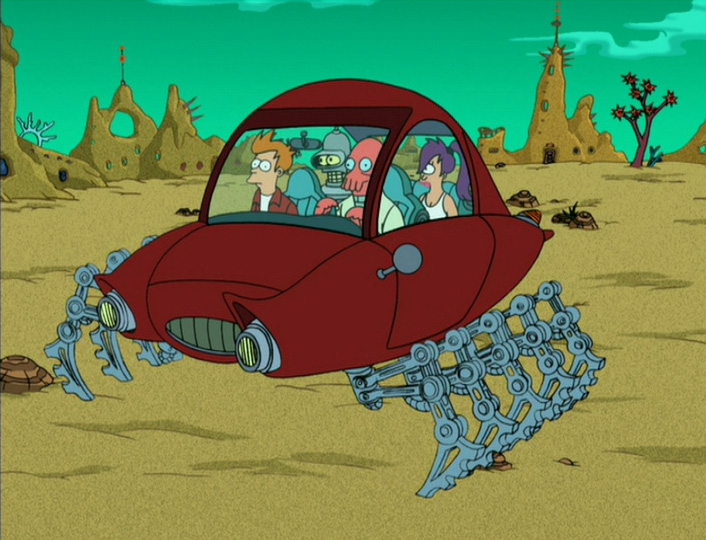
Decapodian Sedan

The Decapodian Sedan is a versatile vehicle designed to carry passengers across all types of terrain. The Decapodian Sedan resembles an automobile, but instead of wheels possesses crab-like legs that are capable of moving at considerable speed. These vessels can travel across wasteland, rocky hills, sand, swamp and even along the bottom of the sea.
Since coming to Earth, Decapodians have been using these vessels to explore the seas and coast. The arrival of these crab-like vehicles has caused quite a stir in those who have not seen them before. Decapodian car salesmen are beginning to make themselves known, selling these vehicles for a mere 1,000gp (or equivalent weight in Krill).
Required Crew: 1
Top Speed: 125 mph
Cargo: 3 passengers plus 500 lbs in trunk
Structural Hit Points: 40
Armor: Advanced Ceramics (AC 4)
Weaponry: None

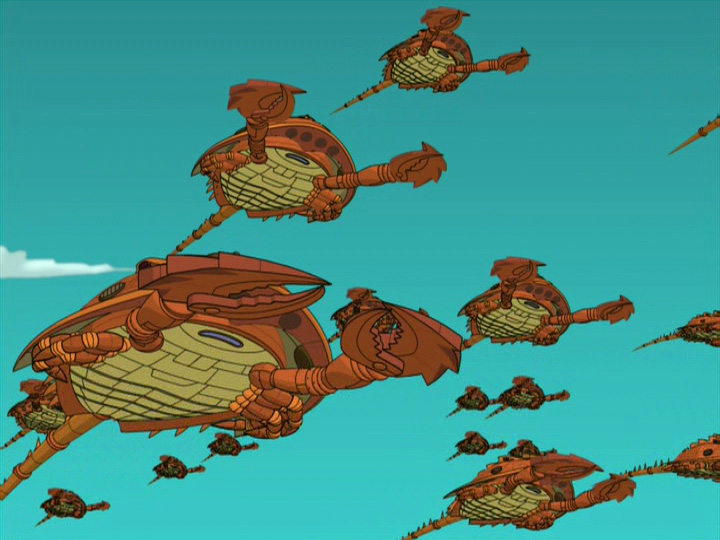
Decapodian Warships 
The Decapodian Warship resembles a giant metalic lobster. Its weaponry consists of a disintegrator cannon and its massive claws which are capable of shredding star-ship hulls with startling ease. As with all Decapodian technology, the Warship is capable of operating in space and in the deepest ocean.
These vessels have been seen flying over coastal waters, usually about to submerge or taking off from an underwater location. It is believed that underwater caves house hangers for these vessels, connected to similarly hidden bases. 
Required Crew: 10
Top Speed: 600 mph, swim 300mph, crawl 250 mph
Cargo: 10 passengers plus 2,000 lbs. freight
Structural Hit Points: 400
Armor: Decapodian Composite (AC -2)
Accessories: Class V Sensors, Comm Unit, Inertial Inhibitor, Hyperdrive (Plane Shift), Robot Repair Unit
Weaponry: Two Claws: 10d6+12 damage each, disintegrator cannon (10d10+)

Mobile Oppression Palace (MOP)
The Mobile Oppression Palace is used by the Decapodians as a mobile base or operations and a massive war machine. A Mobile Oppression Palace can function in any environment, from the airless void of space, to the deepest seas. While moving in water, the MOP moves at twice its land speed, allowing it to traverse the deep swiftly.
The interior of a Mobile Oppression Palace should be treated as a small fortified town, having multiple floors, rooms and encounters. The palace itself will be well stocked with equipment, weapons, and specialized gear for aiding the aliens in their efforts on Earth. Guards, guardian beasts and robotic servants will all be in great abundance.
Required Crew: 40 (max. 61)
Top Speed: 30 mph, swim 60 mph
Cargo: 72 passengers plus 8,200 lbs. freight
Structural Hit Points: 600
Armor: Decapodian Composite (AC -2)
Accessories: Class VI Sensors, Inertial Inhibitor, Robot Repair Unit
Weaponry: Two Claws: 10d6+12 damage each. Twelve missile launchers in four batteries of three each (two batteries forward, two aft, located dorsally and ventrally), see Mutant Future Page 121 for damage and range.

Thursday, December 13, 2012

Atomic Dawn: Corvitas

Corvitas
Corvidus 
Population: 8792
Economy: Opium, rice, slavery, gladiatorial games
Government: Earldom
Militia: 87 (muster 439) not including the Earls personal troops.
Total Gold: 10300999gp (11715gp limit)
Corvidus is a small city in the Duchy of Naark. The city is situated along the Orange River, connecting it with both the Udson River to the East, and on a direct river route to the city of Naark. A prosperous but uncomfortably quiet city, Corvidus is focused primarily around the cultivation of rice and opium. Earl Ulysses Corvidus rules over this region with an iron fist, using Canisoid and mercenary guards to patrol his lands with brutal efficiency. 
The city is a jumbled collection of buildings made of wood, plaster, stone and brick with the wealthier areas being made from concrete and stone. Earthen streets are the norm here that quickly turn into mud at the slightest provocation. Wooden walkways and planks are commonly used to traverse the swampier regions. Litter-bearers, slaves and pack animals are preferred over wheeled vehicles (which get stuck).
Places of Interest
The city is full of interesting places, people and things, and adventurers are urged to explore. Some interesting places are: 
Arena: Where the locals let their hair down to enjoy bloody spectacles. Races, boxing, athletic competitions and bloody arena bouts are regular occurances with truly gruesome events on holidays. 
Bog Town: Bog Town, or "The Bog" as it is know by the locals, is the lowest and swampiest area of town. The buildings are made of wood and plaster, and crammed together. The Bog is where the majority of the cities slaves and poor live, and it is a good place to disappear.
Bog Town
CostMart: This is a standard CostMart and not a superstore, but is still very popular. The store is situated right across Main Street from the Great Market, much to the frustration of the local merchants.
Fish Head: This area south of the river hosts a daily fish market. Fish Head also has the largest number of taverns, inns and brothels in the city.
Fixit Bridge: This is the name of both the bridge itself and the iland in the middle of the Orange River. This is where assorted machinists, and gadgeteers sell their services. The island hosts several machine shops that cater to river travelers. The bridge is host to numerous shops that often overhang the street forming a dark tunnel through which all traffic must pass.
Fort Judd: This fortress overlooks the western edge of town and guards the river trade between Goshen Swamp and the Udson. Captain Swift is in command here, and leads the town militia. The Fort has a small barracks and a large jail.
Great Market: The Great Market is a large (mostly outdoor) market where all manner of produce, livestock and ever slaves might be bought and sold. It is a loud, boisterous place. 
Our Lady of Shadows Church: The most prosperous church in town, dedicated to the infamous St Death (see Religions) and presided over by Bishop Ashmen, four priests and a dozen warrior monks. Walking Dead guard the church, but are trained to not harm the clergy. The Earl himself is a great admirer of the Saint, and attends services regularly, though he has an ornate shrine in his home.
St Fiacre Abbey: This monastery is located outside the city walls, near the opium farms and is dedicated to the patron saint of mutant and medicinal plants. Abbot Ran Greed and the monks and nuns (10 each) tend to the spiritual needs of the laborers and slaves. The Earl considers them useful for keeping the workers quiet. The Abbey itself is a cluster of wooden buildings surrounded by a wooden palisades.

Friday, December 7, 2012

Atomic Dawn: Androids

Androids are a major player race in Mutant Future, and in my home campaign of Atomic Dawn, Androids are associated with several major powers. They are tough, versatile, and all of them have mutation-like powers that can easily raise them to superhuman levels of ability. But as characters, androids offer some very interesting role-playing opportunities. Though made on an assembly line, or grown in a vat, androids have minds. They think, hope and dream, and often consider their role in the universe more thoroughly than do human beings.
Androids in Mutant Future can be clearly mechanical to so human like that even they may not realize that they are artificial beings. Basic Androids are basically really advanced robots, Synthetic Androids are beings made from synthetic flesh and (milky-white) blood, much like Bishop from the Alien Franchise. Replicant Androids are bio-engineered creatures who are indistinguishable from naturally born persons who live for a mere five years. 
In my home campaign of Atomic Dawn, androids are not always dug up from ancient sites, but are still being made by certain groups. And though these groups are themselves quite sophisticated, the androids themselves are almost always left out of the loop.
In my home campaign, androids come primarily from the following sources:

CostMart

The manufacturing giant CostMart has continued to exist even long after its creators have been burned to ash. Now this super chain of stores and manufacturers continues to produce abundant but lower-quality goods for sale in its many stores, superstores and mobile kiosks. 
As an organization run and staffed primarily by androids, it is the largest producer of androids in Merica. Replicants form the bulk of androids that work for CostMart (as they die before promotion is a possibility), though a large number of Basic and Synthetic models are also produced.
CostMart adroids come in all shapes and sizes, and are often hired out by the corporation for a wide range of uses (see models below). Others leave the corporation for the sake of adventure, or in an effort to represent the companies ideals to the wider and wilder world.

C.A.R.S.O.N.
The A.I. known only as C.A.R.S.O.N. (see Map) is known to command a large number of Basic androids and apparently has the capability to build and supply a veritable army of them. Thankfully this Greater A.I appears to be uninterested in conquest, but is rather interested in researching the many strange beings found in the age of the Atomic Dawn. 
Androids in service to C.A.R.S.O.N. are usually on fact-finding missions, seeking out some obscure facts or seeking to educate the often ignorant denizens of the blasted lands. Most have a military look about them and all are educated in the ways of warfare.

Android Models
Androids have and are constructed for a wide variety of functions, and though many are "generic" models with no particular function in mind, different “models” of androids exist with ability ranges might differ. Some sample models of android are presented below.

Diplomat (Face)
Created as assistants, salesbots and assorted forms of entertainer (ahem), diplomatic androids are the most human-friendly androids you are likely to meet. All are physically attractive, charming and intelligent, though most are not buit for hard use.
+1 INT, +2 CHA, -1 STR and -2 CON
Recommended Powers:
Physical: Fragrance Development,
Mental: Empathy, Intellectual Affinity (Trade), Mental Barrier, Neural Telepathy, Precognition, Quick Mind

Labor
Used primarily in factories and mines, labor androids are built for endurance. Labor androids are heavily built, physically strong and made to survive in harsh conditions. They are not built for social interation however.
+2 CON, +1 STR, and –1 INT, -2 CHA
Recommended Powers:
Physical: Density Alteration (Self), Energy Retaining Cell Structure, Epidermal Photosynthesis, Gigantism, Increased Physical Attribute (CON)
Mental: Accumulated Resistance

Soldier
Soldier model androids were and are used in military and law enforcement roles. Soldier androids are always powerfully built and clearly made for battle. Soldier Androids are usually simple (not stupid) and prefer head-on solutions to situations.
+2 STR, +1 DEX, and –3 INT
Recommended Powers:
Physical: Increased Physical Attribute (STR or CON), Natural Armor (Heavy), Night Vision, Regenerative Capability
Mental: Ability Boost, Force Screen

Scout/Recon
Built to be fast, quiet and perceptive, scout androids are lightly built. Many are slim and some have shapeshifting powers allowing them to blend in with organic creatures. Many scout androids find work as assasins, advance soldiers and monster hunters.
+1 STR, +2 DEX, and -3 CHA
Recommended Powers:
Physical: Chameleon Epidermis, Increased Sense (Vision, Hearing), Metamorph, Quickness, Regenerative Capability
Mental: Know Direction

Technician (Tech-Droids)
Built to manufacture and maintain the miraculous machines of the Ancients, Technician androids are greatly prized. Tech-Droids are seen as almost magical beings who have access to arcane lore (not far from the truth), with many setting themselves up as wizards and asking exorbitant fees. 
+3 INT, -1 STR, -2 CHA
Recommended Powers:
Physical: Dwarfism, Increased Sense (touch)
Mental: Intellectual Affinity (Tinkering), Neural Telekinesis, Night Vision, Quick Mind


Android Equipment
Equipment designed specifically for the use of androids is typically no-frills and plain to look on, but resistant to harm. Many of these items are designed to link up with an androids power core and powers, and so are not normally usable for non-androids. 

Necron Series Environment Suit
Environmental suits designed for the use of Basic and Synthetic androids. Necron suits are favored by CostMart android operatives, but can be purchased by independent androids for a nominal fee of 250gp. 
These bulky jumpsuits are made of reinforced Ballistic Nylon (AC 4) and have numerous pouches and pockets, allowing for the wearer to carry 10 pounds of goods while leaving his/her/its hands free. When worn by a Basic or Synthetic Android, Necron Armor grants the following: 

Night Vision Goggles allowing the wearer to clearly discern heat
sources in the dark as the mutation thermal vision to a
distance of 240’.
Complete protection against gases and other airborne contaminants.
Complete protection against radiation classes 1-5, treating the class of radiation as if it is 5 lower. The suit will alert the android of the presence of radiation with an internal pop-up on the suits goggles.


Monday, April 4, 2011

Atomic Dawn: Mutant Future Skill System

My home campaign of Atomic Dawn for the Mutant Future game has a cultural and technological level more in-line with the 1800s than the Dark Ages, though there are many low tech zones. As-such skill-sets and technological knowledge is similar to that found during the American Old West, though access to the machine shops and specialized equipment to make a locomotive (for instance) is very hard to come by. Most places default to a level somewhere between the Dark Ages and 1700's Colonial America, with a few more advanced gadgets and innovations such as revolvers, hand-crank washing machines, pot-belly stoves, shotguns, and beer with bubbles.
If used correctly, skills can make a character more three dimensional, painting a picture of his or her abilities and interest beyond combat or powers. Skills also allow a character to have more options at character creation, especially if the character in question has not rolled the best in Attributes and/or Mutations. Even a blind, irradiated character with a Strength of 4 can still be useful with the right skills.

Skills
Skills represent a character’s “background knowledge,” as well as areas of expertise gained through practice and training. As characters grow in experience, they learn new skills and improve upon what they know. There are twelve different skills in the game, described below.
Every character has a range of skills that allows him to perform a variety of actions with varying degrees of expertise. These skills represent the "day job" and origins of a character as well as grant more fine tuning for a characters overall concept.
At 1st level, characters begin with the characters INT score x's 10 in points to allocate amongst his or her desires skills, with no more than 40 points placed in a skill at this stage. Most characters gain 10 additional points to allocate amongst their skills at each odd-numbered experience level. Pure Human characters gain these 10 points at every single level to reflect the innovative spirit of these people and to offset their lack of mutations.
Skills
  • Academics: Academics represents knowledge of the past and present, and is applied when deciphering ancient languages, and doing modern research and study. It is also used when attempting to identify Artifacts, , modified by the characters Tech Bonus due to a high INT score.
  • Athletics: This is the practice of all things overtly physical. Running, jumping, climbing and the like. 
  • Business: Business is still very important in the Mutant Future. This skill is rolled when selling items or buying from junk merchants. 
  • Crafting: This skill represents skill in making items such as those found in the equipment lists on pages 16-20. However it also is used when repairing Artifacts, modified by the characters Tech Bonus due to a high INT score.
  • Diplomacy: Diplomacy is the art of negotiation, persuasion. Successful use of this skill should allow the player character (along with role-playing) to change the attitude of NPC's by one category to the positive.
  • Medicine: From first aid to surgery, this is an important skill to have in any adventuring group. Successful use of this skill can stop PC's from bleeding out when incapacitated, and allows a character to heal as though having full rest even if traveling. 
  • Outdoors: Survival in the weird wilderness of the Mutant Future is no joke. This skill includes knowledge of animals, plants, riding, tracking, setting snares and general survival. 
  • Perception: Searching, listening and sensing the motives of others are all determined by this skill. Player characters who are on lookout or are otherwise paying attention should be allowed a roll to avoid being surprised. 
  • Performing: The arts are not forgotten in the Mutant Future, and in-fact are highly prized. Characters who are very good at performing can earn a decent living and are usially welcome. 
  • Piloting: This represents operating any and all vehicles, though a ML might require a Tech or Academics + Tech check if the vehicle is a relic. Otherwise, this skill can be used to handle watercraft and general navigation. 
  • Politics: This is  the skill for those who wish to deal with the law (either side of it), rulers, city guards or legal contracts of any kind. 
  • Stealth: This skill is all about not being noticed, and of covering your activities. Sneaking, hiding, sleight-of-hand and all other kinds of sneakiness are included. A successful roll on this skill allows a character to surprise opponents in combat.
The Skill Check: Roll D100 and compare this to the relevant skills percentage score. If the dice roll is equal to or less than the skill’s score, the attempt is successful. If the total is greater than the skill’s score, then it has failed. What this actually means in a given situation is entirely up to the referee.
Referees should be careful not to overuse the dice! A game can be ruined quickly if every action that a character takes might fail or succeed depending on a skill check.

Uses in Storytelling
Use of this skill system is not just for players! Mutant Lords (Mutant Futures term for a Gamemaster) can easily make use of this system to add depth to his campaign setting.
Mutant Lords and Players are encouraged to come up with their own character origins. Think of characters from your favorite Post Apocalyptic movies, books or comics, and try to think of what skills might apply. Hank McCoy (Beast) is a biochemist as well as an X-man, and Severian from The Book of The New Sun was a torturer. Think how these careers would translate into Skills and run with it.
As an example taken from the NPC's mentioned on pages 39-41 in the Mutant Future game book we can construct a simple character origin and career from before he/she/it became an adventurer. As follows:
Animal Trainer: Animal trainers have to be alert, skilled in catching animals and in keeping them alive. Thus their primary skills would likely be- Animal Lore, Profession (animal trainer), Survival.
Blacksmith: Tremendous physical power and endurance as well as great skill and awareness are required to be a blacksmith. Thus along with a high STR (15+) their primary skills would likely be- Athletics, Profession (blacksmith), and Lore (metallurgy).
Scholar: The life of a scholar is all about reading, and talking to other scholars. Thus along with a high INT (15+) their primary skills would likely be- Lore (any), Profession (scribe or scholar), and Tech (any)
Seafarer: River and ocean trade is a tough but necessary trade, calling for physical skill, awareness and an ability to handle their craft. Thus their primary skills would likely be- Athletics, Entertainment, Profession (seafarer), Lore (sea).
Spy: A spy must be sneaky, self sufficient, and sharp to survive long. Thus their primary skills would likely be- Athletics, Skullduggery and Survival.
Junk Merchant: Trading salvaged trash and treasures for coin and trade goods requires skill with numbers, the gift of gab and the ability to patch up damaged goods (at least as far as appearances go). Thus their primary skills would likely be- Diplomacy, Profession (merchant) and Tech (any).
Slave Trader: The grim business of Slave Trading is a sad reality in the era of Atomic Dawn, and requires awareness, skill in business and the ability to keep slaves healthy (or at least alive). Thus their primary skills would likely be- Lore (medicine), Profession (merchant) and Ride.

DISNEY & DRAGONS: D&D in Fantasyland

Many times, in recent years I have encountered would-be players of Dungeons and Dragons whose sole experience with the fantasy genre h...