Showing posts with label Pangea. Show all posts

Monday, July 15, 2013

Pangea: Man-Kin Monster Stats Pt 1

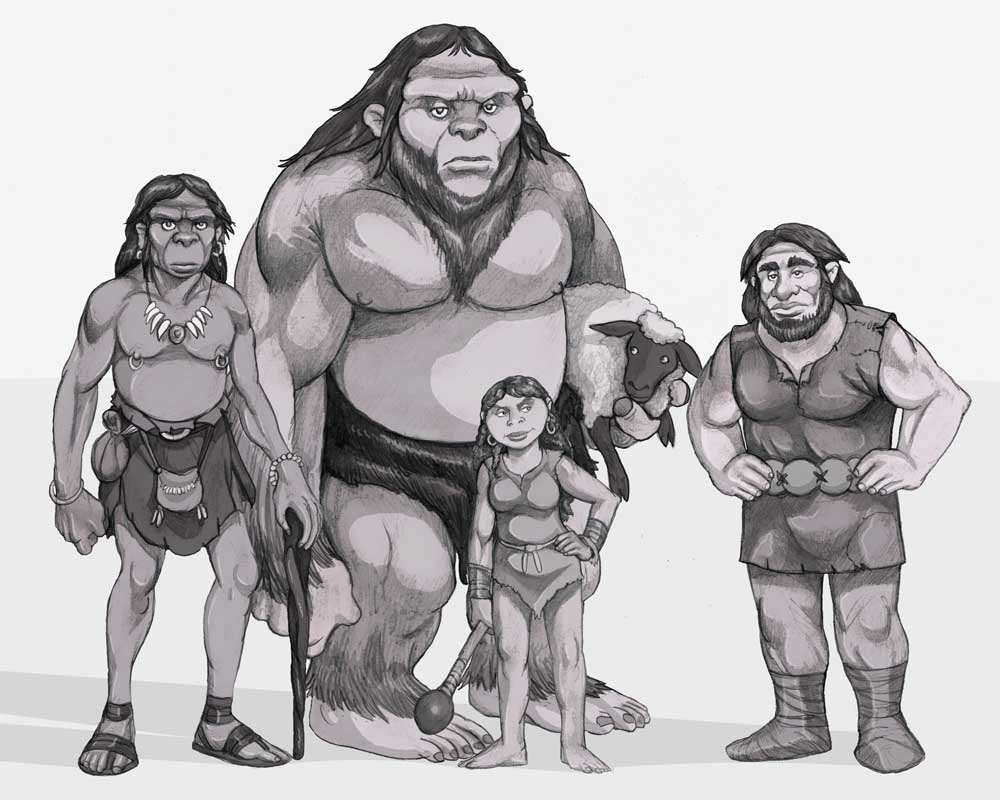
Front to back; Awani, Ruhin, Dakkati, and Kabiri.
Pangea is a vast, mostly untamed world with only small enclaves of civilization, often closed off from the modern world. Ancient races, many of whom are pre-human and hostile, force the varying races of man and man-kin into close proximity. This closeness in many cases causes distrust and hostility, but can also make for intriguing dynamics of family and friends (or at least allies of necessity).
So I have written up the not-strictly-human races of man-kin as monsters for use by the GM. More to come.

AWANI
Medium Humanoid, Chaotic (CN), Low Intelligence; Squad (1d20)*
HD: 1
AC: 14 (cured hide and shield)
ATK: By weapon
MV: 30
SV: F 13, R 15, W 16
XP: 50 (CL 1)
The Awani are a primitive race of people closely related to both the Adamu and Kabiri. Awani are as tall or taller than the Adamu, averaging six feet in height in males and five and a half feet tall in females. Awani have ape-like faces, with heavy brows and large jaws. The Awani are a brutish, short-sighted people who prefer violence and action to higher pursuits, and are notorious as raiders and thieves. On their own they live simple lives of hunter-gatherers, but will take on a raiding culture when they encounter other people who are weaker than themselves.
Awani are organized into tribes of 1d10 x 30 warriors plus non-combatants equal to 150% of the warriors. The tribe has one additional 2 HD sub-chief for every 30 warriors and is led by a 3 HD chief who keeps a personal bodyguard of 5d6 2 HD warriors. There is a 50% chance that a family of 1d4 kabiri dwells with the awani.

More information on the Awani can be found in Races Pt 2.

DAKKATI (Homo sapiens neanderthalensi)
Medium Humanoid, Neutral (N), Average Intelligence; Band (1d12)*
HD: 2
AC: 12
ATK: By weapon
MV: 30
SV: F 12, R 15, W 15
XP: 100 (CL 2)
The Dakkati are an ancient people who dwell in the wild mountains and in cold lands. They are renowned hunters, survivors and regarded as nearly magically skilled at working stone, bone and ivory. Dakkati are considered short by Adamu standards, ranging between five and five and a half feet in height, but very stocky and with thick bones.
Dakkati organize into clans of 1d10 x 20 warriors and additional non-combatants equal to 3 times the number of warriors. For every 20 warriors, there is an additional sub-chief with 3 HD. Clans are commanded by chiefs with 4 HD, and usually keep 3d6 dogs as hunting companions and guard animals.

More information on the Dakkati can be found in Races.

KABIRI (Meganthropus)
Large Giant, Chaotic (CN), Low Intelligence; Band (1d8)
HD: 4
AC: 16
ATK: Slam (1d6) or by weapon
MV: 40
SV: F 10, R 14, W 15
XP: 200 (CL 4)
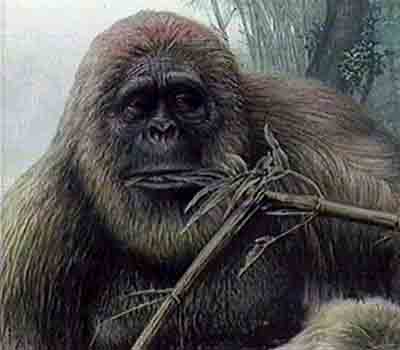
The Kabiri are a race of hairy giants who dwell in the hills and mountains. They are kin of the great Giants, though this relationship is strained at best, with only Hill Giants, Ettins and other brutish giant-kin having any sense of kinship with the Kibiri. When standing fully erect, an adult Kabiri stand from eight to ten feet in height on thick, short legs. Their powerful arms are slightly longer than their legs, this along with their brutish jaws and low brows give them an ape-like appearance.
Kabiri are not liked by most other races, largely due to the Kabiris huge appetites and predilection to stealing livestock and violent natures. Most Kabiri live in wild tribes or among mixed bands of bandits, especially Awani, where their great strength comes in handy.

More information on the Kabiri can be found in Races

RUHIN (Homo floresiensis)
Small Humanoid, Neutral (N), Average Intelligence; Gang (1d10)*
HD: 0
AC: 13 (leather armor and buckler)
ATK: By weapon
MV: 20
SV: F 14, R 16, W 16
XP: 25 (CL 0)
The Ruhin are a small race of people that share a close relation to the Awani and distantly to Adamu. Ruhin average only three feet in height and have a distinctly ape-like look. Despite appearances the Ruhin are a cunning and organized people that are excellent trackers, hunters and thieves. These skills serve them well in the wild and in dealing with other peoples.
Ruhin tribes include 1d20 x 20 warriors plus additional non-combatants equal to 100% of the warriors and 6d6 giant monitors. For every 40 ruhin there is a sub-chief with 1 HD. Tribes are commanded by a 3 HD chief who has a bodyguard of 2d10 elite ruhin warriors with maximum hit points. The usual composition of a ruhin army is as follows:
35% Leather and buckler (AC 13), club, 3 darts
25% Leather and buckler (AC 13), short bow, club
15% Leather armor (AC 12), heavy flail
10% Cured hide (AC 15), spear
10% Leather (AC 12), short bow, dagger, giant monitor lizard
5% Studded leather and shield (AC 15), light mace, giant monitor lizard

More information on the Awani can be found in Races Pt 2.
Wednesday, June 5, 2013

Pangea: Blem-Yae Golems

The Blem-Yae are magically animated statues created solely by the priests of The Church of Heaven. Unlike Golems, Blem-Yea are animated by the spirits of willing sacrifices chosen from amogst the Church's acolytes. This means that Blem-Yea have no chance of going “berserk,” and that they can learn and adapt. The Church uses them as elite servants and soldiers in their struggle against the forces of darkness and as guardians of the High Temple at Mt. Meru.

Nohock
Medium Construct, Lawful (LN), Average Intelligence, Squad (1d4)
HD 8
AC 18
ATK  2 fists (2d6), or by weapon +2
MV 40 (Burrow 10)
SV F 6, R 9, W 14
XP 900 (CL 10)

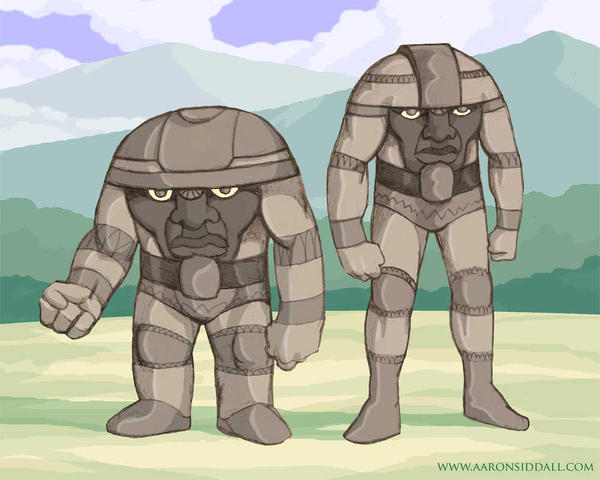
The Nohock Blem-Yea is a squat, hefty type of construct, made of dense stone weighing 1,000 pounds and standing 6ft in height. Nohock Blem-Yea are animated with the spirits of mason-acolytes in service to the Gods Of Meru, and continue as great crafters of stone. Treat all Nohock Blem-Yea as Engineers (see page 41 of the Blood & Treasure PHB). All Blem-Yea are under the permanant effects of a free action spell, allowing them to move and attack normally even under the influence of magic that usually impedes movement, such as paralysis, solid fog, slow, and web. Grapple attacks against the subject always fail and escapes by the Blem-Yea succeed.
All Nohock Blem-Yea are extremely strong, able to move huge stones and even burrow through solid stone using their magically augmented hands. In their service to Meru, Nohock Blem-Yea construct temples and waterways, excavate tunnels, and lay siege to enemies of the faith. A common trick in war is when a Nohock burrows under the walls of an enemy encampment, collapsing enemy structures before emerging and attacking "soft" targets with their huge fists.
Special Qualities: Magic resistance 20%, permanent free action
Spells: At will- detect magic, guidance, mending, stone shape, 3/day- detect undead, divine favor, magic stone, 2/day- hold person, strength, 1/day- meld into stone, earthquake

Seeb
Medium Construct, Lawful (LN), Average Intelligence, Squad (1d4)
HD 8
AC 18
ATK 2 fists (1d10) or by weapon +1
MV 60
SV F 8, R 8, W 14
XP 900 (CL 10)

The Seeb Blem-Yea is a tall, agile construct, made of magically lightened stone, weighing 600 pounds and standing 7 1/2 feet in height. Seeb Blem-Yea are animated with the spirits of messenger-acolytes in service to the Gods Of Meru, and continue as messengers and spies in the service of Meru. Treat all Seeb ck Blem-Yea as Rogues (see page 41 of the Blood & Treasure PHB). All Blem-Yea are under the permanant effects of a free action spell, allowing them to move and attack normally even under the influence of magic that usually impedes movement, such as paralysis, solid fog, slow, and web. Grapple attacks against the subject always fail and escapes by the Blem-Yea succeed.
All Seeb Blem-Yea are fast, able to cover large stretches of territory with a eerie speed despite their stone construction. These constructs act as spies, messengers, and witch-hunters for the High Priests of Meru. Those being hunted by a Seeb have much to fear, as the tracking skills and magical abilities of these creatures is terrible to behold.
Special Qualities: Magic resistance 20%, permanent free action
Spells: At will- detect magic, find the path, mending, virtue, 3/day- comprehend languages, divine favor, random action, 2/day- augury, dexterity, 1/day- haste, locate object


Tuesday, May 28, 2013

Pangea: Looking For Writers

The setting of Pangea is a big one, and I think one that needs fleshing out. Its a huge paleolithic fantasy setting full of dark corners, burgeoning cultures and primordial wonders just waiting to be fleshed out and brought to life by creative minds.

For those who are unfamiliar, Pangea is a fantasy setting where ancient Adamu (H. Sapiens) compete with other human kin in a world chock full of prehistoric monsters and magic. I'm going for an "Ancient Atlantis meets The Lost World" pulp kind of stuff here.

So, I am making this proposition; If there are any writers out there interested in writing a short story or two set in Pangea, I will produce one of more illustrations for it and post it on this blog. You can contact me at asiddall at msn dot com.

For quick reference of Pangea:


Friday, April 19, 2013

Pangea: Music To Game By

Following are a few bands and songs that I think are excellent for setting the mood for a Pangea Campaign.


Future World Music - Voyage to Atlantis
Pretty much anything by Future World Music is excellent for fantasy RPG music and particularly for a campaign set in Pangea. Moody, melodramatic and full of that energating "pop" that brings the majesty of grand vistas to the hearts eye! I highly reccommend.


Audiomachine - Young Blood
This song and the majority of Paul Dinletirs Epica album is superb for gaming. This is a grittier and more "aggressive" sort of music, with a strong feel of light vs dark. Excellent for grim struggles and moments of hard choices in a game.


City Of The Fallen - Elohim
City of the Fallen is a production music company based in Washington DC. They produce music for movies and video games, and so all of their compositions are moody and excellent for action scenes. Though not as good for travelling music and longer sequences, these songs are excellent for fight scenes.


Friday, April 12, 2013

Savage Babes: Lana


Here we have the lovely Lana, played by Barbara Bach in the 1981 movie Caveman. The movie is a goofy romp through a prehistoric land chock full of prehistoric stop-motion dinosaurs and giant bugs. Oh, and Ringo Starr is in it too.


Friday, March 22, 2013

Pangea: Stone Age Armor and Weapons

In the world of Pangea, the majority of mankind is still well into a Stone Age level of development. This means that most communities, tribes and races use the readily available materials of Stone, Wood, Bone and Animal Hide for everyday use and in the making or armor and weapons. Though the city-states are at a Bronze Age level of development (see Bronze Age Weapons Arms and Equipment), the average person of Pangea does not yet have access to a steady supply of bronze-age goods and skills. And so a mixing of the two is common.
System: Stone Age level items can be made and possibly repaired by any character with the Survival skill. When the necessary components are available (GMs are advised to reward creativity on the players part), a skill check produces one such item.


MELEE WEAPONS
Chopper: These items were designed to be tools to dig through rough ground to find food (tubers and grubs) as well as in chopping or shaping soft woods and skinning animals. They could be pressed into service as a weapon and would eventually become much more effective when combined with a haft in the form of a handaxe.

Club: Most Stone Age examples of this oldest weapon are improvised, simply a large sturdy branch found after a storm or broken off a tree. The bone club is found among the remains of animal kills. The hardwood club is the one exception, and is an extremely rare and potent weapon due to the difficulty of shaping hardwoods with stone cutting implements. The hardwood club is the one Stone Age example of this weapon that is not a weapon of convenience and will often feature such minor improvements as leather wrapping around the handle of the weapon, making it easier to grip in combat.

Hammer: These weapons are a variation on the Handaxe, though employing a blunt stone. These weapons are used to bludgeon prey and foes and are also used in construction.

Handaxe: One of the major technological advancements of the Stone Age, these items were valuable as both tools and weapons (some argue more the former than the latter) and developed from the “choppers”, axe heads held in the hand to skin animals and chop wood. With these items came the ability to shape wood for specific purposes, including more sophisticated clubs, but also hafting. With hafting both the axe and spear were born and humans went from prey animals to hunters in their own right.

Knife: Like the chopper, the knife was more of a tool than a true weapon although sharpened bone stakes were probably intended to be stabbing devices. Like the chopper, these items benefited from hafting, when they were transformed into spears.

Maul: Effectively a really big Hammer, and usable only by the very strong. Kabiri, giants and the very strong enjoy the power of this weapon. Only those with a Strength of at least 16 can wield a Stone Maul, all others suffer a -2 penalty.

Spear: As mentioned above the spear was developed by the addition of a haft to a knife, allowing the attacker to increase his reach and keep his enemy at bay while increasing the force of his thrusts. These weapons could also be thrown, allowing the attacker to extend the range of his attacks even further.


RANGED WEAPONS
Atlatl: The atlatl is a “spear thrower” designed to increase the velocity (and thus the range and damage) of the javelin and the dart. These items are modified as listed in the equipment table above, gaining an improved Range Increment and (in the case of the weighted atlatl) a damage bonus.

Dart: The dart is a tiny javelin used as a weapon by primitive cultures, often in conjunction with either poison or the atlatl.

Javelin: The javelin is one of the most effective ranged weapons of the Stone Age, especially when combined with the atlatl. Because of its superior range, many armies use these weapons for ranged attacks with soldiers carrying only a single true spear for melee combat.

Shortbow: The shortbow is one of the most important weapons ever invented and has a great deal of impact on hunting and warfare. The ability to hurl missiles accurately and with great force across great distances allows the attacker to keep his enemy at bay, hopefully killing an attacker or animal before they can close to injure him. Shortbows do not allow the wielder to add his Strength modifier to bow damage.

Stone, thrown: One of the simplest weapons imaginable, this is nothing more than a rock that has been chosen (or shaped) to extend its throwing range. This is also the ammunition for the sling.


ARMOR

Cured Hide: Animal hide needs proper treatment or it will rot. Use of hide is common in making clothing, particularly trousers, shirts, gloves and shoes. Cured hide armor uses thick layers of hide stitched together , making an effective armor and are fairly warm (though a bit stuffy in warm weather).

Furs: Animal furs are widely used to make clothing. Such clothing are usually kilts or skirts, shirts, cloaks, gloves, leg warmers and hats. As armor they are somewhat useful, and are favored by hunters and those wishing to move freely and stay warm.

Bone: Bone is used in the making of tools, buttons, needles, jewelry and more, but it is sometimes employed in the making or armor. Bone armor uses the bones of hearty animals (such as dinosaurs) into armor plates stitched over leather. Such armor can be impressive, but can rattle a bit.


STONE AGE MATERIALS
Bone: Bone weapons offer some advantages over stone, but also some significant drawbacks. Bone weapons can be brought to a much finer point than stone or wood, making these weapons some of the most dangerous encountered in a Stone Age society. Where bone weapons suffer in comparison to stone is in their durability.
A bone weapon breaks on a natural attack roll of 1. If a weapon breaks during a successful attack normal damage is still inflicted on the target.

Wood: The advantages of wooden weapons are that they can always be fashioned with ease and materials are in ready supply. Still, these weapons are primitive even by Stone Age standards.
A wooden weapon breaks on a natural attack roll of 1. If a weapon breaks during a successful attack normal damage is still inflicted on the target.
Wooden piercing and slashing weapons suffer a -2 circumstance penalty to attack rolls against armored targets, including creatures with a natural armor bonus of +2 or higher.

Stone: A step up from wood, weapons made of stone can be honed to a sharp point by a well-equipped craftsman, increasing the damage potential of the weapon being made. While still prone to flaking and shattering these weapons are also more durable than those made of wood alone.
A stone weapon breaks on a natural attack roll of 1. If a weapon breaks during a successful attack normal damage is still inflicted on the target.


EVERYDAY ITEMS
Some of the items listed on page 38 and 39 in the Blood and Treasure PHB can be produced with Stone Age level skills, but will be made with Stone, Wood, Bone, Hide or similarly "primitive" materials. The following items may be produced with Stone Age materials.

Clothing: Artisans Outfit, Cloak, Cold Weather Outfit (see below), Explorers Outfit, Peasants Outfit, Travelers Outfit.

Miscellaneous Items: Backpack, Basket, Blanket, Block and Tackle, Firewood, Fishhook, Fishing Net, Grappling Hook, Hammer (see Melee Weapons), Pole (10'), Pouch, Rope (Hempen), Sack, Sledge, Torch, Waterskin.


Friday, March 15, 2013

Pangea: Buyan Longneck

Huge Animal, Neutral (N), Animal Intelligence; Herd (1d8)
HD 16
AC 18
ATK Talons (2d6), or trample (2d10)
MV 40
SV F 3, R 5, W 10
XP 1,600 (CL 17)
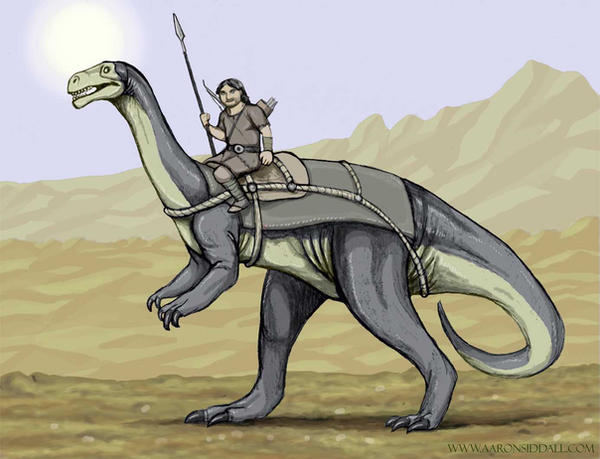
The Buyan Longneck is a species of dragon* that is widely domesticated for use in heavy labor and in warfare. These creatures have the typical body shape of a plant-eating dragon: a small skull, a long and flexible neck, a stocky body and a long, mobile tail. The arms of the Buyan Longneck are short though strongly built, with hands adapted for powerful grasping. These creatures can grow to a length of 25 to 30 feet in length and weigh around 13,000 to 16,000 pounds. It is believed by sages to be distantly related to the immense Thunderbeasts of the southern forests and plains, but is far more trainable.
Riders of a Buyan Longneck report that these creatures can be cantankerous, but with proper care and patience during training, they can be loyal and clever mounts. Buyan Longneck eggs are worth 2,000 gp apiece on the open market, while young are worth 3,000 gp each. Professional trainers charge 1,000 gp to rear or train a Buyan Longneck.

*Dragon is a general term for "Huge Reptile" in Pangea. All dinosaur species are considered to be "dragons" while the fire-breathing type of dragon is considered the stuff of wild stories.

Wednesday, March 6, 2013

Pangea: Campaign Region

The Urantian Plateau is the central region in which the Pangean Campaign is to take place. Though still a wild, prehistoric land haunted by primordial beasts, this region hosts the largest organized civilization of Adamu and related races in the known world. This is not to say that all is peaceful however, but mankind in Urantia is fairly civilized, and (mostly) allied against the threat of the Naacal Reptilians and other threats.
Though the Urantian Plateau is just north of the equator, the plateau is of such a high elevation that it is largely temperate in climate. This makes for ample sun and plentiful growing seasons.
Urantian civilization is centered around scattered city-states, whose area of control consists of the reach of their armies. Each of these city-states is ruled by elites of one kind or another. Between these city-states are wild lands ruled by tribal villages and petty kingdoms who squabble, war and trade as needs and desires drive them.
Some details from the map are;

Artelmis
The city-state of Artelmis is home to the most developed science of Alchemy, Astronomy and Theurgy in all of Urantia. Here, arcane Magic Users form the ruling class, under the leadership of the Three Lords of Artelmis; King Dartah (Trans 20), King Potemes (Conj 20), and King Tilhi (Div 20). Under these magic users are a large number of lesser mages and alchemists, who all strive towards the unlocking of magical conundrums and the production of potions and spells.
Artelmis trades extensively with the wild tribes of the Pirhua Jungle, having many uses to the exotic and often dangerous plants, poisons and creatures native to that land. This trade relationship has allowed the alchemists and vision-seekers of Artelmis access to many materials that are harder to come by in other regions of Urantia.
Artelmis is famous for its production of potions, glass, and material components, but is also known for its cultivation of Alkahest or Wizard Weed a powerful narcotic used in vision-quests. This substance and similar drugs are sold far and wide by agents of Artelmis, and is highly addictive. Adamu form the ruling class in Artelmis, but all other human kin may be found here, as well as a number of truly alien beings. Awani are common foot-soldiers or Artelmis, as the magic user ruling class frightens this normally troublesome race into obedience.

Labruula
The city-state of Labruula is in the northernmost region of Urantia, and as-such must contend with northern raiders, mountain savages, giants and mountain beasts. The people here are hardy, crude and boisterous, prizing revelry, song and brawling above other pursuits. Despite this, the people of Labruula have a very strong sense of courtesy, and take oaths and hospitality as sacred. Labruula is ruled by a council of elders, whose members change frequently. Selection of council members is the result of votes by the landholders of the community, overseen by the leading holy man (usually a Druid).
Labruula is famous not only for its warriors, but also for its skilled hunters and animal trainers. Smilodons and  Tusked Behemoths (Deinotherium) trained for battle are hallmarks of this city-states. The Tusked Behemoth, armored and equipped for battle and crewed by screaming Dakkati warriors is the hallmark of the Labruula war machine, causing even the Hill Giants of Kerr to shake in fear.
Labruula also exports horses, mercenaries, lumber, slaves and hide. Imports are steel, wine and luxury goods. A great number of Kabiri and Dakkati live here, where they are accorded equal rights and respect due to their skills.

Meru (The Holy City)
Meru is the name of both a mighty city-state and the volcanic mountain upon whose roots the city rests. This city-state is the core of the Church of Heaven, the single largest unifying force of the races of Mankind. The Church rules this city-state under the guidance of Kyafus, High Priest of Heaven. Under this beneficent ruler, and army of Clerics, Paladins, Monks and Adepts spread the will of Heaven amongst the peoples and attempt to keep the Adamu and other kin of man unified against inhuman threats such as the Naacal Reptilians.
Mount Meru is said to be where Heaven meets Earth, which is easy to contemplate, as the mountain is the tallest in the known world. This mountain is rich in precious gems and metals and its volcanic ash makes the region extremely fertile. The city-state of Meru makes full use of the mountains resources to fuel its efforts to unite the nations.
Meru is a bustling place, full of art, music and holy places dedicated to the Powers of Heaven. The markets here are the most extensive in Urantia, with open air stalls and permanent shops selling all manner of produce, livestock, cloth, clothing, jewelry and virtually anything else that can be legally bought and sold. Illegal and/or questionable wares are only traded in utmost secrecy, as the guard of Meru is especially zelous and well-paid.

Nochs
The city-state of Nochs is built upon the ruins of an ancient outpost of the Shalmali, a powerful race of sorcerous giants. The city is high-walled and forbidding, with a grim reputation for deceipt, dark curses and evil magic. This reputation is only partially justified, as the people of Nochs are a quiet, secretive folk who prize secrets and cunning over more open pursuits.
Nochs is ruled by The Council of Shadows, a varying group of families who continuously seek to thwart and outdo each other in the suptle arts of assination, theft and deceipt. However despite this, they are quick to join forces in defense of their city-state, using all of their arts to destroy common threats.
Nochs produces the best illusionists and necromancers in all of Urantia, employing these magical skills in defense of their city and in trade to would-be buyers. Magical items related to these arts are also sold, though truly powerful necromancy is rarely sold due to its potential use against the city-state. There exists a state of "respectful competitiveness" between the magic users of Nochs and Artelmis, with both cities having lively trade and energetic hatred for the other in equal measure.

Talenos
The city-state of Talenos is in a region of rolling rills and elegant mountains, with the city itself nestled between two hill near the Mountains of the Moon. Talenos is a city state where music, magic and enchantment are greatly prized, and where the many mysteries of womanhood are seen as deeply sacred. Talenos is ruled by Queen Astra III (Sor 20) and the eldest and most experienced women in the city. These rulers are typically Bards, Clerics (specialty clerics of the Moon), and Enchantresses. Men are relegated to warrior or menial classes and rank in all areas in Talenos.
Talenos produces the greatest musicians, poets and enchanters in all of Urantia, and is also known for its wine and the gems mined in the mountains. Though Adamu form the ruling class, Dakkati and Kabiri are also well represented in Talenos.

Trigas
The city-state of Trigas is known for its ship-builders, merchants and swaggering warriors. Trigas is ruled by a council of Merchants who rule over a large army of merchant soldiers, and ships. The city itself is built atop a series of docks, platforms and piers as it is built over swampy land except for a small number of rocky islets. The people of this city are either buyers, sellers or slaves, with even the slaves looking for a new deal.
Of all the city-states, Trigas alone is uninterested in conquest, as they prefer to seek wealth as a means to an end. The merchants of Trigas will trade with anyone or anything, leaving morals aside for another day. It is because of this that this city-state is both admired and despised across Pangea.


Friday, March 1, 2013

Pangea: Campaign Map Sneek-Peek


This has been a busy week. I had intended to give a brief overview of the campaign setting, accompanied by a more detailed version of the above map. But alas, I have run a bit short on time.

So to tide you over until next week, above is a simple map of the central campaign setting.

Much MUCH more to come!

Monday, February 25, 2013

Pangea: Music To Game By


The Lost World - Michael Stearns 
Michael Stearns is a U.S. musician and composer of ambient music. Much of his music is perfect for the feel of Pangea, having an epic but very human feel to it. The Lost World has more than just the title to lend itself well to the story of Pangea, it is a moody and energetic journey.


Steve Roach - Earthman 
Steve Roach is a U.S. composer and performer of ambient and tribal-ambient music, whose recordings are also classified in the genres of space, drone, New Age, and electronic music.
Earthman is pretty perfect for the feel of Pangea. The music has a slow, moody buildup that seems to promise excitement around the corner. Excellent for keeping the mood of a journey through wild country.


Yor: The Hunter From the Future - title theme (Yor's World) 
The opening credits to the incomparable YOR, featuring the title song by Guido & Maurizio De Angelis (Oliver Onions). Personally, I can BARELY understand a word these guys are singing about, but it calls to the goofy-grim feel that can help make a Pangean campaign fun.


Friday, February 22, 2013

Pangea: Races Part 2

Across the vast expanse of Pangea are a great number of peoples, races and creatures. As a Sword and Sorcery setting (with some High Fantasy leanings), Pangea focuses on humankind. But for the full feel and scope of the setting to hit home, numerous human "races" are presented as player characters. In the last installment I presented the Adamu (Homo Sapiens), Dakkati (Neanderthals) and the mighty Kabiri (Meganthropus). All of these races are more-or-less human, or at least close enough that they have similar habits, tastes, needs and desires.
Below are two more races of human-kin that help make the world of Pangea a more interesting place. Even though they do occasionally live alongside one another, more often than not differing races do not get along. Even in mixed communities friction and even open hatred is common.

Awani (Homo Erectus)
Awani warrior with a fire-hardened spear.
The Awani are a primitive race of people closely related to both the Adamu and Kabiri. Awani are as tall or taller than the Adamu, averaging six feet in height in males and five and a half feet tall in females. Awani have ape-like faces, with heavy brows and large jaws.
The Awani are a brutish, short-sighted people who prefer violence and action to higher pursuits, and are notorious as raiders and thieves. On their own they live simple lives of hunter-gatherers, but will take on a raiding culture when they encounter other people who are weaker than themselves.
Awani are often used as cheap minions and soldiers for powerful wizards and warlords. However this requires a firm hand as the Awani are a lazy and dirty people, and prone to picking fights at very bad times.
Awani prefer warm lands, particularly forests and rough hills where there is ample game. Awani are usually nomadic, but set up temporary villages of hide, wood and bone. Such communities are ruled by the biggest, toughest Awani (male or female), who rules through force and cunning.
Awani have a deep respect and reverence of fire, and all of their chief spiritual beliefs all revolve around this element. Fire gods such as Cacus The Galloping Flame, and Belos the Bull are favored over other gods.
True Clerics of Heaven are extremely rare among the Awani, with Druids or Sorcerers taking the place of spellcasting priests.
The Awani are Stone Age people, using simple tools, fire-hardened spears, and hide and bone clothing and devices. They must trade and/or steal more advanced tools and armor, however such items usually fall apart due to disrepair. Most Awani think metal-working is magic, and are deeply respectful of blacksmiths.
Awani modify their starting ability scores as follows: Str +2 (max 18), Int -1, Wis -1 and Cha -1. Awani have darkvision to a range of 60 feet. They speak their own clan language, and might also learn Common, Dakkati, Ignam and Hill Giant. Awani can multi‐class as assassin/clerics, assassin/fighters and assassin/ magic‐users.

Ruhin (Homo floresiensis)
Ruhin family along the forests edge.
The Ruhin are a small race of people that share a close relation to the Awani and distantly to Adamu. Ruhin average only three feet in height and have a distinctly ape-like look. Despite appearances the Ruhin are a cunning and organized people that are excellent trackers, hunters and thieves. These skills serve them well in the wild and in dealing with other peoples.
Ruhin are a quiet and clannish people who prefer to operate unobserved by the "giant races" who the Ruhin see as needlessly loud and smelly. Amongst themselves of close friends, the Ruhin are a clever and witty people who love games, food and strong drink.
In mixed communities, the Ruhin are often night workers, vermin catchers and thieves.
Ruhin love warm forests, and areas near trees where they can make use of shadow and cover. They have a deep fear of flying predators, as their small size makes them easy prey for aerial attackers. Airdragons (Pterasaurs) and giant serpents are both considered major enemies and are seen as evil by the Ruhin.
Like the Awani, the Ruhin are Stone Age people, though they are better able to use and maintain equipment bought, stolen or traded from other peoples than the Awani. Ruhin prefer slings, spears and other thrown weapons, and make ample use of traps, nets and other weapons that trip up larger creatures.
Religious traditions are well-developed among the Ruhin, with Druids and Adepts being central figures in Ruhin communities, though true Clerics are very rare. Reverence of a wide host of gods and goddesses such as Tsetse, the Darting Wrath (Raptor Goddess), and Nyonye Ngana (Ant God) to name only a few.
Ruhin characters modify their starting ability scores as follows: Str ‐1, Dex +1, Int ‐1. Ruhin have a land speed of 20 feet and have darkvision out to 60 feet. Ruhin have a knack for hide and moving silently. Ruhin speak their own language and might also learn Common, Dakkati, Draconic, Awani and Hill Giant. They can multiclass as druid/thieves, fighter/thieves and magic-user/ thieves.


Whats Next?
Coming up is more cultural details of the lands of the Adamu and their kin, as well as info on the local flora and fauna. Pangea is a big place, and a great many interesting people and places are to be found in its vast terrain. Lots to come, so stay tuned!

Friday, February 15, 2013

Pangea: Races

The land of Pangea is savage, and haunted by many dangers. Great beasts, wild spirits, and ancient evils all lurk right around the corner. And so the people of this world need to be rugged, versatile but still essentially human (or human enough). So below are the three primary races of player characters of Pangea. There are other intelligent races, who will be detailed in later posts, but the ones below are the most organized and human friendly in the central campaign region.


Adamu (Humans)
The Adamu are a versatile, and widespread people who can be found in a number of different colors and shapes. In the Middle Lands of Pangea (the beginning campaign region), the Adamu are a predominantly brown-skinned people, with dark-brown to black hair and dark eyes.
Adamu culture is usually based around families, clans and towns and city-states which are ruled by a council of wealthy elders. City States are ruled by ruling families who preside over a council of city fathers. Though laws among clans, towns or nomadic bands are usually simple, those in the city-states are a bureaucratic nightmare, with bribes, corruption and betrayals being common. A wise man steers clear of the law in the city.
The Adamu of Pangea are at the late Bronze Age/Early Iron Age of development. Houses are timber and stone, with nomads using hide tents supported with reed and bone.
In the past hundred years, the rise of the Church of Heaven has united a number of Adamu clans and city-states under a New Religion. This faith reveres the gods of the sky, the Sun, the Moon (more on this very soon!), The Starry Sky and other luminous lords and ladies. This church, centered in the Holy City of Meru is the greatest unifier of the Adamu that Pangea has seen in many ages. What the bodes for the future is anyones guess...
Adamu are rolled up as Humans as per the rules in Blood and Treasure pages 3 and 4.


Dakkati (Neanderthals)
The Dakkati are an ancient people who dwell in the wild mountains and in cold lands. They are renowned hunters, survivors and regarded as nearly magically skilled at working stone, bone and ivory. Dakkati are considered short by Adamu standards, ranging between five and five and a half feet in height, but very stocky and with thick bones.
Dakkati are a softly spoken people with a great love of nature, stories, music (particularly the bone flute) and family. Hunting, herding, beekeeping and stone-working are major parts of their societies, and so the more nature oriented classes are favored. Druids and storyteller Bards are the central religious leaders and primary spellcasters of the Dakkati. Other, more modern religions and magic users (such as Clerics) are deeply distrusted. Among the Old Gods  Uta the Bear Mother is deeply adored, with Druids and Adepts presiding over services to this "Bear Mother".
Dakkati prefer stone settlements, particularly ones with underground levels. In the mountains, Dakkati will build clan holdings incorporating cave networks and adding on with additional stone and earthworks. Though rough-hewn, these dwelling are always snug and surprisingly comfortable and clean. Most Dakkati prefer stone, bone and horn weapons, though some are starting to trade for metal weapons and tools.
Dakkati modify their starting ability scores as follows: Str +1, Con +1, Cha -1. Dakkati have a knack for survival. Dakkati speak their own unique clan language and might also speak Common, Giant, Terran or Troglodyte. Dakkati may advance in any class, though they prefer nature oriented classes. Dakkati can multi-class as druid/bards, druid/fighters, fighter/magic-users and fighter/ thieves (scout).


Kabiri (Meganthropus)
The Kabiri are a race of hairy giants who dwell in the hills and mountains. They are kin of the great Giants, though this relationship is strained at best, with only Hill Giants, Ettins and other brutish giant-kin having any sense of kinship with the Kibiri.
When standing fully erect, an adult Kabiri stand from eight to ten feet in height on thick, short legs. Their powerful arms are slightly longer than their legs, this along with their brutish jaws and low brows give them an ape-like appearance.
On their own, Kabiri are a tribal people, having family bands centered around a grand matriarch. These clans live in the harshest wilderness, living in near constant conflict with large predators and harsh conditions. Because of this, Kabiri admire strength and endurance over intelligence.
Magic is greatly feared among the Kabiri, with only the wilder sorts of Druid and Adepts existing as spiritual leaders in their communities, though more often than not such Kabiri mystics live alone. Kabiri worship fierce gods of the wilds such as Oanoe Razorfang, Kuvana Mountain Mother and Uta the Bear Mother, and have little use for the Church of Heaven.
Kabiri are a stone-age people, stealing, trading or even earning better made equipment and weapons, though they often take some time to learn how to properly tend to such items. As they produce nothing worthy of trade, Kabiri clans often sell their services as mercenaries in return for quality goods, food and a chance to see the wider world.
Kabiri modify their starting ability scores as follows: Str +4 (max. 20), Dex -1, Con +2, Int -2, Cha -2. They are large creatures, so must pay double the normal price for armor. Kabiri have darkvision to a range of 60 feet. They speak Giant, but smart Kabiri often speak Common or other local tongues. Their thick hides give them a +2 bonus to Armor Class. Kabiri can advance as barbarians, druids, fighters, thieves and fighter/druids up to a maximum of 7th level.

Tuesday, February 5, 2013

Sword and Sorcery Music To Game By

As a game-master, I LOVE having music going in the background while planning and running a game. This helps set the mood of the game as well as to inspire players to be heroic in their portrayal of the characters under their control.

And so below are five tracks from seven fairly different bands. Each is excellent for setting a mood for a good game, and a few of them have some AWESOME cover art.


Hyperborea - chrysalis


Fairyland - Score to a New Beginning 

Tangerine Dream-Sorcerer 

Wolf People - Castle Keep


Serenity - Engraved Within

Thursday, January 31, 2013

Pangea: A Blood & Treasure Campaign Setting


Pangea
Pangea is a world that I will be detailing for use with the Blood and Treasure Fantasy RPG. This is to be a Sword and Sorcery setting that will borrow liberally from my favorite books, comics and movies that can be shoe-horned into the setting. It will be a primordial world, filled with ancient beasts, decadent cities and wandering barbarians. I make no attempt at historic accuracy, relying instead upon the Rule of Cool.
The map above is merely the black-and-white beginning. Color, details and lots of regional info is to come.

The World
The world of Pangea is largely unexplored (by humans). Soaring mountains, teeming jungles, and wide plains cover the land and the seas are vast and deep. The warmer climes host dinosaurs, huge insects and wild tribes. The colder lands are home to a wide range of mega-fauna mammals
Smaller and more modern animals do exist, and are found in many of the climes they are today. Such animals are usually a more feral variety (wolfish dogs, and smallish shaggy horses for instance), but are recognizable.

Society
Most of the peoples of Pangea live in wandering tribes, small kingdoms or city-states. Technology varies from stone age to iron age in development, with some noticeable jumps due to the use of magic. People will be as varied as they are today, though with a larger number of adventurers.

Races
The Blood & Treasure RPG suggests a number of humanoid races for play. Most of the people of Pangea would react to seeing an Elf or Dwarf much like they would to seeing a ghost, as magic and clearly non-human races are widely feared (and for good reason). So none of the standard fantasy races will be available for play. Rather than using differing races, Pangea will have a number of Human-kin races, with only a small number of non-humans (NPC's). I will post an article on these races next week.

So stay tuned! MUCH more to come!

DISNEY & DRAGONS: D&D in Fantasyland

Many times, in recent years I have encountered would-be players of Dungeons and Dragons whose sole experience with the fantasy genre h...